
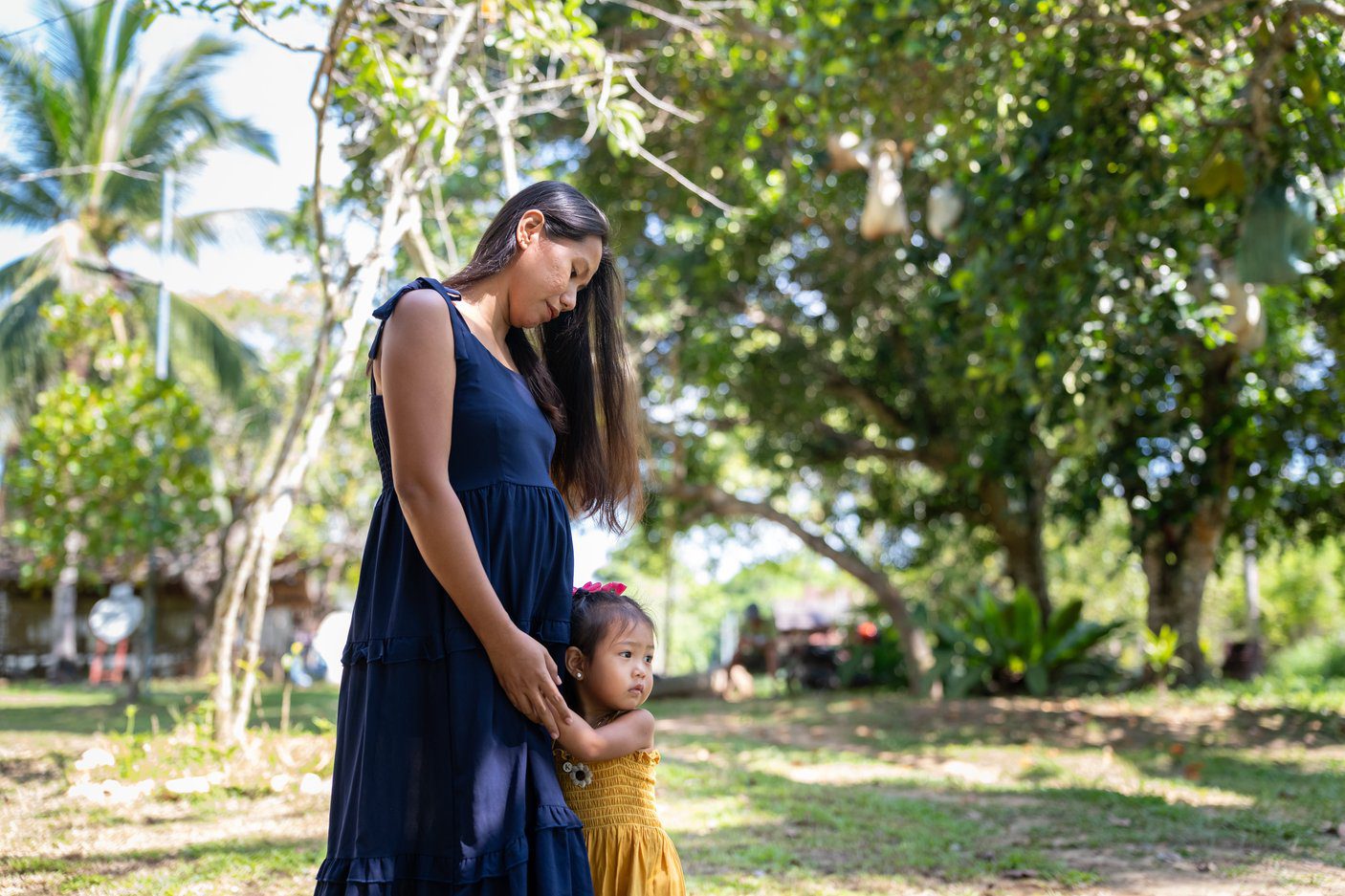
In the Philippines, mothers, health workers, and local leaders are showing what becomes possible when proven nutrition solutions are translated into everyday practice, strengthened through local systems, and built to last.
In Filipino, “matatag” means strong.
For Jovelyn Estember, strength is part of what it means to be a mother.
At 31, Jovelyn is expecting her third child in Aborlan, a town on the island of Palawan. She grew up in the village—known locally as a barangay—of Plaridel, where her father supported their family through rice farming and put Jovelyn and her sibling through college. Today, she is raising her own family there.
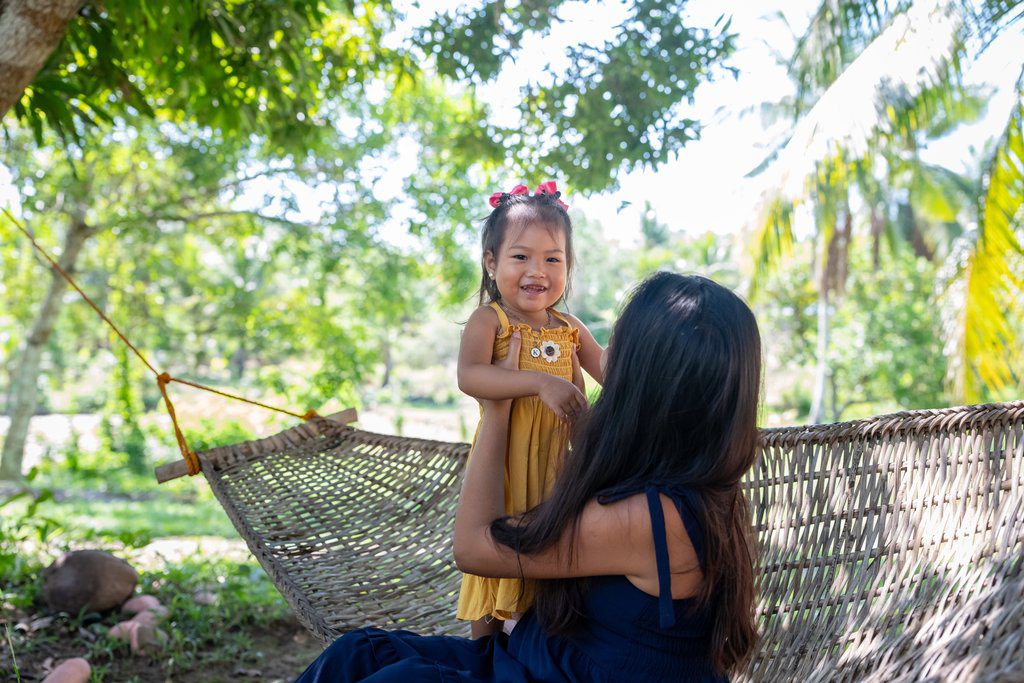
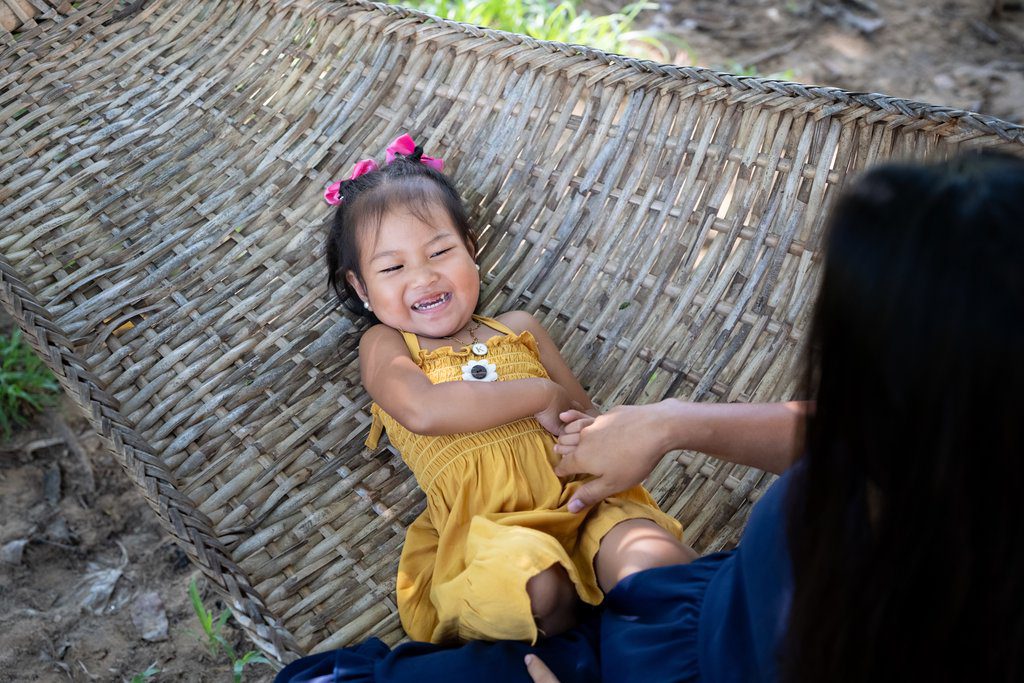
Her oldest daughter, 7-year-old Azalea Bee, is an honor student who loves to sing. Her 2-year-old, Keziah Rayne, is the easygoing eater in the family. And another baby is on the way.
Throughout all three of her pregnancies, Jovelyn has taken multiple micronutrient supplements (MMS), also known as prenatal vitamins and minerals.
“I have been taking MMS since my first pregnancy, through my second, and now my third,” Jovelyn says.
Asked what motherhood means to her, she answers: “Being a mother means being strong. Matatag. Because you endure everything.”
Jovelyn’s strength is her own. But in Aborlan, a growing network of mothers, health workers, and local leaders is helping make optimal nutrition easier to access during pregnancy and early childhood.
Their experience offers a glimpse of the Vitamin Angels 2030: Science. Systems. Scale. strategy in action, grounding nutrition programs in evidence, strengthening the local systems that deliver them, and building toward sustainable impact at scale.
The nutrition challenge
Nutrition challenges remain significant for women and children in the Philippines, particularly during pregnancy and early childhood. Anemia affects 22% of pregnant women, while nearly 1 in 4 children under age 5 experience stunting.
The country’s exposure to natural disasters adds another layer of complexity. Increasingly frequent and intense typhoons disrupt food production and contribute to disease transmission, and some provinces are still recovering from previous disasters, putting additional pressure on government resources available for health and nutrition programs.
These challenges underscore the need for more than effective nutrition interventions alone. Women and children also need reliable access to those interventions through strong local systems that can continue delivering them over time.
From evidence to everyday practice
Science is the starting point. Vitamin Angels grounds our programs in proven nutrition interventions while using implementation research and learning to understand how those interventions can work most effectively in real-world settings. This reflects the organization’s broader implementation science approach: using evidence and experience to identify barriers, improve program quality, and strengthen delivery.
Vitamin Angels introduced MMS in the Philippines in 2018. Research conducted during the pandemic found that women generally liked MMS, but some struggled to take it consistently, often simply because they forgot. That insight is now helping shape how health workers counsel pregnant women.
Vitamin Angels works with the Department of Health to adapt and roll out MMS training for service providers and support the country’s broader transition from iron and folic acid to MMS.
Evidence has its greatest impact when it becomes part of everyday life.
In Palawan, that opportunity took shape through Barangay First 1,000 Days, or BF1KD, a community-based platform designed to bring essential nutrition services closer to pregnant and postpartum women, young children, and their families.
BF1KD brings mothers, health workers, and local leaders together around practical group sessions that integrate proven interventions including MMS, vitamin A supplementation, deworming, breastfeeding support, and nutrition education.
By embedding these services within the barangay and strengthening the skills and knowledge of the people who deliver them, BF1KD helps turn proven interventions into part of a local-led, sustainable system. It also reflects Vitamin Angels’ broader approach to integrated programming: layering complementary nutrition interventions onto existing delivery platforms when doing so can improve quality, efficiency, and health outcomes.
Strengthening the people behind the system
The approach is also strengthening the people already serving their communities.
Before BF1KD, Municipal Nutrition Officer Marica Madeja had just four nutrition staff working across 19 barangays.
“It was so hard to cover all areas,” she says.
Today, trained volunteer Barangay Nutrition Scholars facilitate sessions in their own communities with minimal supervision.
“We saw the confidence of our volunteers grow from training to their first sessions,” Marica says.
For facilitator Lolita Tidula, practical tools have made a difference.
“The facilitator’s guide you gave us is such a big help,” she says. “Before, we were lecturing without a guide, and that was hard for us.”
Many of Palawan’s community health workers have served for 10 or even 20 years. Strengthening their skills helps to support positive nutrition practices long after a training ends, embedded in the people families already know and trust.
That is a critical part of building stronger nutrition systems. The Vitamin Angels 2030: Science. Systems. Scale. strategy recognizes that sustainable impact depends not only on supply of nutrition products, but on the capabilities, partnerships, processes, financing, measurement, and other systems that make effective delivery and program implementation possible.
Building something that can last
Aborlan initially introduced BF1KD in five barangays. After seeing its potential, local leaders expanded it to all 19. Then the town went further, passing an ordinance to institutionalize and support the program.
“We passed an ordinance to support BF1KD and sustain the implementation,” says First Councilor Reina Michelle Umbanie Ruhen.
Local monitoring has documented decreases in underweight, stunting, and wasting among children under 5 years old. At the same time, program teams report improvements in prenatal care attendance, consistent use of prenatal vitamins, and exclusive breastfeeding.
The progress in Aborlan illustrates what scale can mean: both reaching more people and creating the conditions for proven nutrition interventions to become part of systems that communities and governments can carry forward.
That distinction is central to our strategy. Scale means ensuring that proven solutions are delivered consistently, sustainably, and at the magnitude the challenge demands.
Vitamin Angels introduced MMS in the Philippines in 2018 and now works with approximately 62 program partners across more than 75% of the country’s 82 provinces, 61% of which are local government units.
BF1KD has expanded from El Nido and Aborlan to Narra and Bataraza. Provincial Nutrition Action Officer Daryl Jade Sanchez hopes it will eventually reach communities throughout Palawan and beyond.
But she also emphasizes getting implementation right before expanding further.
“The BF1KD program can be applied all throughout the Philippines, but we have to ensure we polish the implementation first on the pilot sites,” she says.
Her point captures an important principle: scale begins with learning what works, strengthening implementation, and building the local capacity needed to sustain it.
That progression—from evidence, to stronger implementation, to locally owned systems positioned to grow—is at the heart of Vitamin Angels 2030: Science. Systems. Scale.
And for the people making it happen, the goal is deeply personal.
“My dream for my community,” Lolita says, “is that all pregnant women complete their eight prenatal checkups, give birth in proper facilities, exclusively breastfeed their children, and that underweight children will be eradicated from our area.”
Mother of two Sheramy Loreto puts her hope for the future even more simply:
“My dream for my two children is for them to have healthy bodies and to finish their studies.”
Health. Education. Opportunity.
The effects of good nutrition can extend far beyond the first 1,000 days.
So can strength.
Matatag.