
Opinion: Indonesia’s transition to multiple micronutrient supplements shows how evidence, regulation, financing, and local production can build a sustainable national supply.
For the estimated 4.8 million women who become pregnant in Indonesia each year, better nutrition depends on more than a policy decision. It requires quality supplements that are consistently available through antenatal care — a reliable supply that has been central to Indonesia’s transition to multiple micronutrient supplements, or MMS.
The need is clear. Anemia affects 27% of pregnant women in Indonesia. The United Nations International Multiple Micronutrient Antenatal Preparation, known as UNIMMAP MMS, can improve maternal and newborn health outcomes: Research shows that, among anemic pregnant women, MMS can reduce infant mortality through the first six months of life by 29%.
Our task is to turn that evidence into sustained access. Indonesia’s experience shows that this requires coordinated action on regulation, financing, procurement, product quality, and delivery through the health system.
From policy to national supply
Indonesia began exploring the introduction of MMS in 2020. In October 2024, the Ministry of Health formally mandated a full transition from iron and folic acid supplementation to MMS. We adopted a phased approach so that women could receive supplements while the systems for long-term supply were being built.
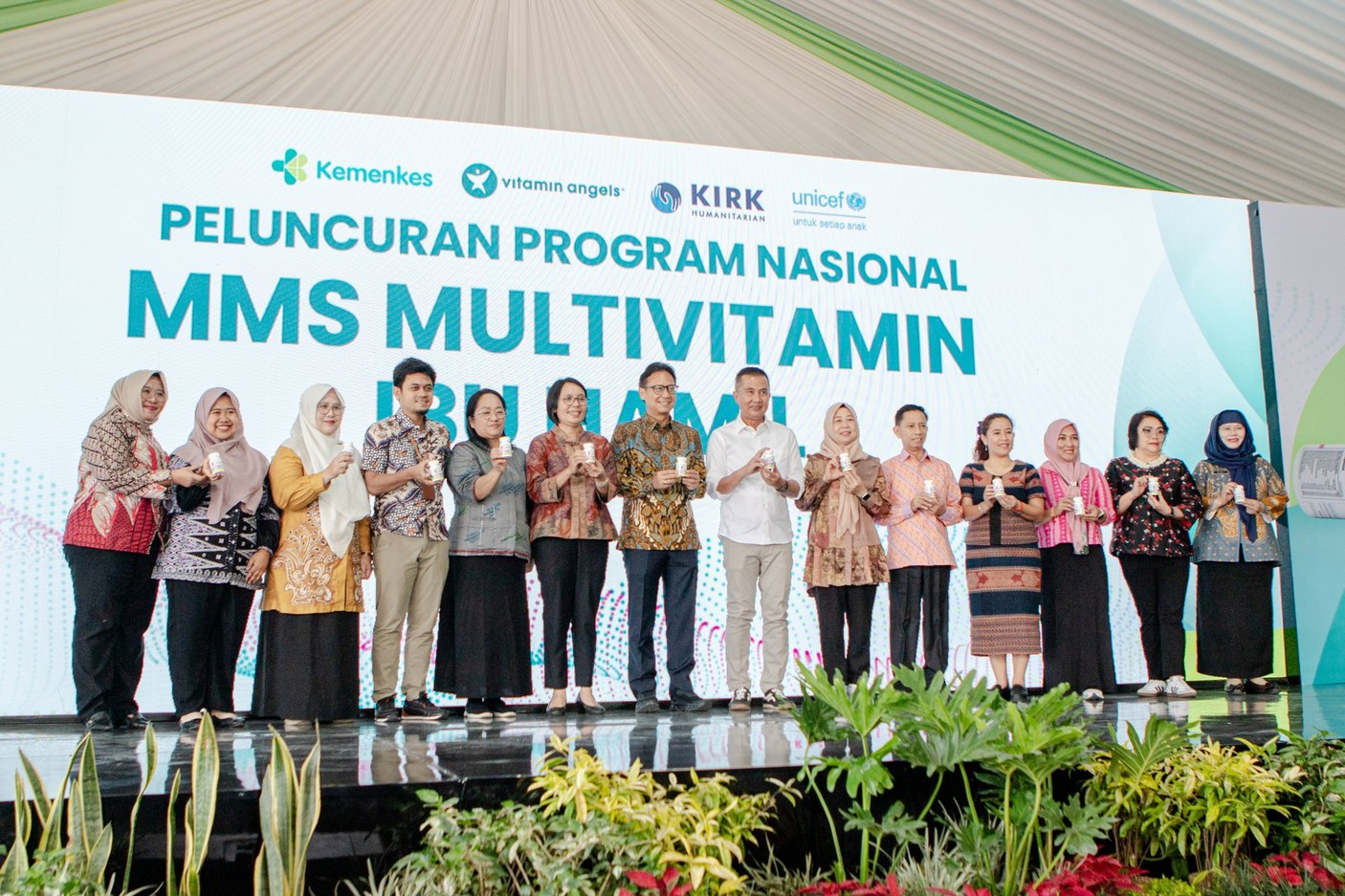
Donations and technical assistance from Vitamin Angels and Kirk Humanitarian supported imported supplies, helping reach 2.6 million pregnant women with MMS during the first two years of the transition. In parallel, Indonesia prepared for domestic production and government procurement.
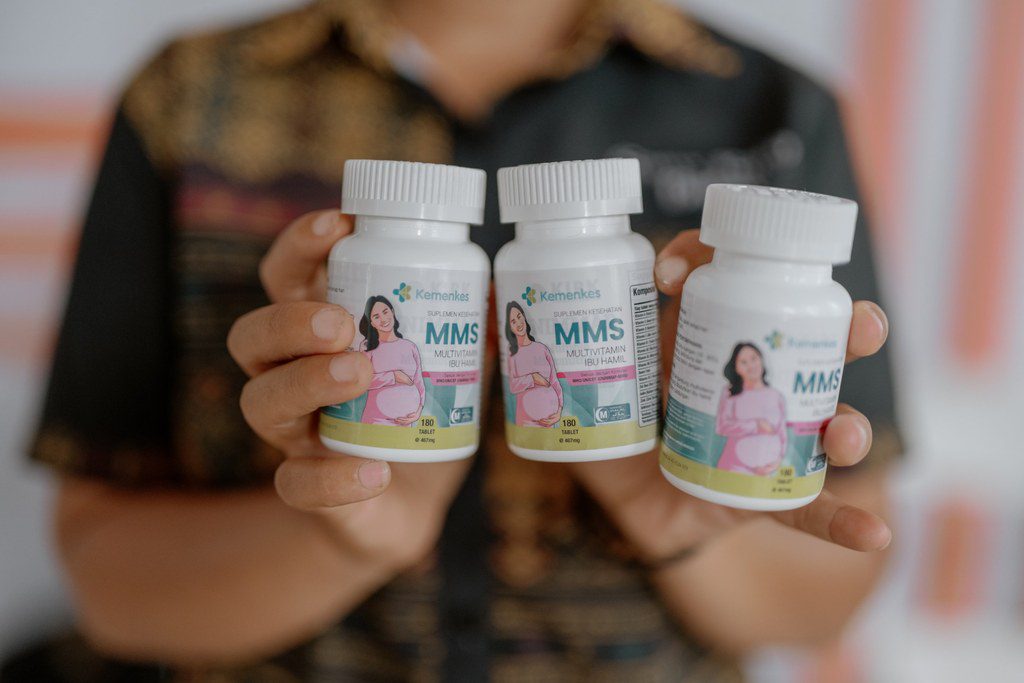
Domestic MMS manufacturing began in 2026, with the first large-scale shipment of locally manufactured UNIMMAP MMS scheduled for delivery this week. By year-end, the Ministry of Health expects to receive 1.3 million bottles of locally manufactured MMS through donations from Vitamin Angels and Kirk Humanitarian.
Three phases have guided this transition.
1. Establish the foundations.
We began by asking what Indonesia’s health system needed to deliver MMS at scale. An implementation science approach helped identify barriers and guide practical decisions.
To assess the supply context, the Ministry of Health worked with Vitamin Angels, the Center of Excellence for Pharmaceutical Care Innovation at Universitas Padjadjaran, Kirk Humanitarian, and the Initiative to Advance Implementation Science in Nutrition at the Johns Hopkins Bloomberg School of Public Health.
The assessment identified gaps across the system: MMS lacked a national use policy and inclusion in the National Essential Medicines List and National Formulary. Regulations did not adequately address MMS, and financing, procurement, and distribution systems were not configured to support its delivery. Health workers also needed national guidance on integrating MMS into antenatal care.
These findings shaped action on policy, regulation, registration requirements, and delivery systems. They also established the need for locally manufactured products to meet internationally recognized UNIMMAP formulation and quality standards.
The Ministry of Health adopted the Expert Consensus Specification, now reflected in UNICEF’s product specifications for MMS, as Indonesia’s national standard. Establishing these essential foundations made it possible to assess domestic manufacturing as a viable long-term supply option.
2. Choose a viable supply strategy.
We assessed both imports and domestic production. Imports could support immediate and longer-term needs, but regulatory requirements, limited global production capacity, and procurement timelines posed challenges. Reliance on overseas supply chains also poses risks that needed consideration.
Domestic manufacturing offered greater control over supply planning, potential reductions in procurement timelines, and an opportunity to strengthen Indonesia’s pharmaceutical sector. It also would be able to support future exports once domestic needs were met. Yet, it required substantial investment, technical assistance, and time. Meeting regulatory and manufacturing quality requirements could take more than three years, with further uncertainty around registration timelines.
Before committing to a domestic manufacturing strategy, stakeholders assessed manufacturers’ production capacity, quality systems, regulatory readiness, and technical capabilities. We also examined import mechanisms as a backup.
3. Build local capacity while maintaining supply.
Our phased implementation plan allowed MMS introduction to proceed while local manufacturing capacity developed. Donor-supported supplies maintained availability as government procurement expanded and manufacturers worked to meet regulatory, quality, and production requirements.
The Ministry of Health convened a coaching clinic for 24 manufacturers, with support from Vitamin Angels, Kirk Humanitarian, and Universitas Padjadjaran. The clinic provided clarity on UNIMMAP specifications, regulatory requirements, long-term government procurement plans, and market opportunities.
Following this initiative, seven manufacturers pursued product development and subsequently received Marketing Authorization Numbers from Indonesia’s Food and Drug Authority, which certifies that a product has passed safety, efficacy, quality, and labeling evaluations and is legally allowed to be sold and distributed in Indonesia.
As of 2026, three locally manufactured UNIMMAP MMS products have been listed in Indonesia’s National E-Catalog, making them available for both public health programs and the commercial market.
Furthermore, although it is not a requirement mandated by the Ministry of Health, one manufacturer has received USP verification, an additional certification to ensure high quality standards for UNIMMAP MMS.
These milestones strengthen the basis for reliable domestic supply and create opportunities to serve regional and global markets.
Lessons for other countries
Indonesia’s experience offers several practical lessons for countries considering national MMS scale-up:
- Start with evidence. Assess the health system and its barriers before choosing a supply model. Implementation science can help translate findings into practical decisions.
- Build a national coalition early. Government, academia, manufacturers, donors, and technical partners need shared priorities and clear responsibilities. Nutrition expertise must be complemented by skills in regulation, financing, product quality, and supply planning.
- Plan for regulatory requirements from the outset. Product classification, registration, quality standards, and procurement approvals affect both cost and timing. Alignment with international standards can help reduce barriers.
- Finance the full transition. Early supplies must be matched by a credible path to sustained government financing and procurement. Women need uninterrupted access while new supply arrangements develop.
- Choose the model that fits the country. Local manufacturing takes time and investment. Reliable procurement of imported products may be a sustainable option for other settings.
Indonesia has shown that a sustainable MMS supply requires investment in the systems that connect policy to care. Governments and partners should align regulation, financing, procurement, and delivery from the start. That is how a proven intervention can reach women consistently, year after year.