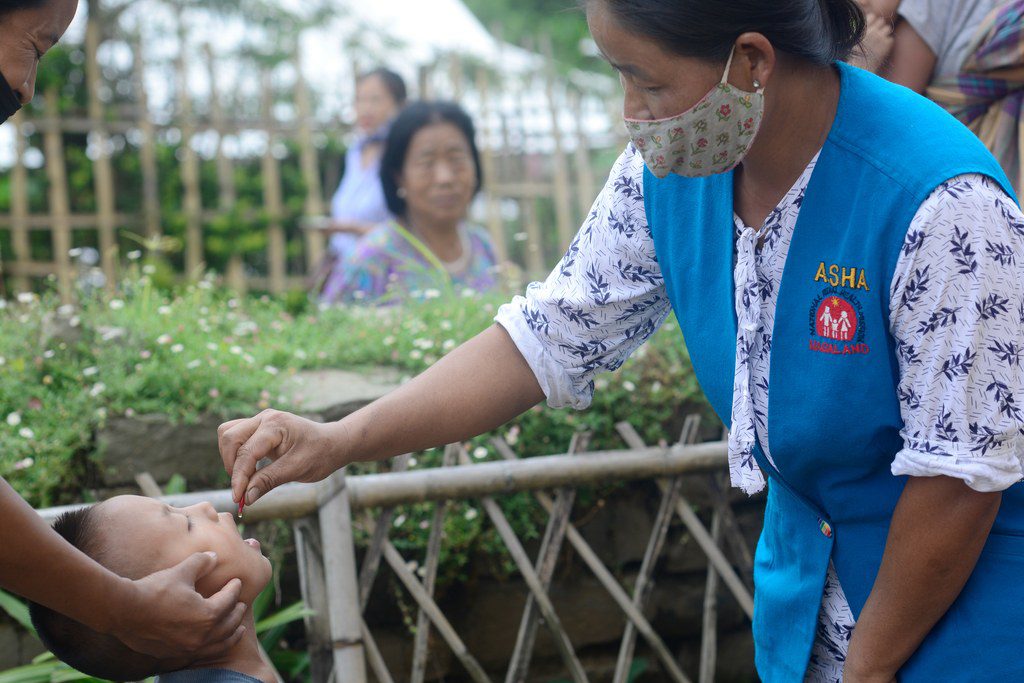
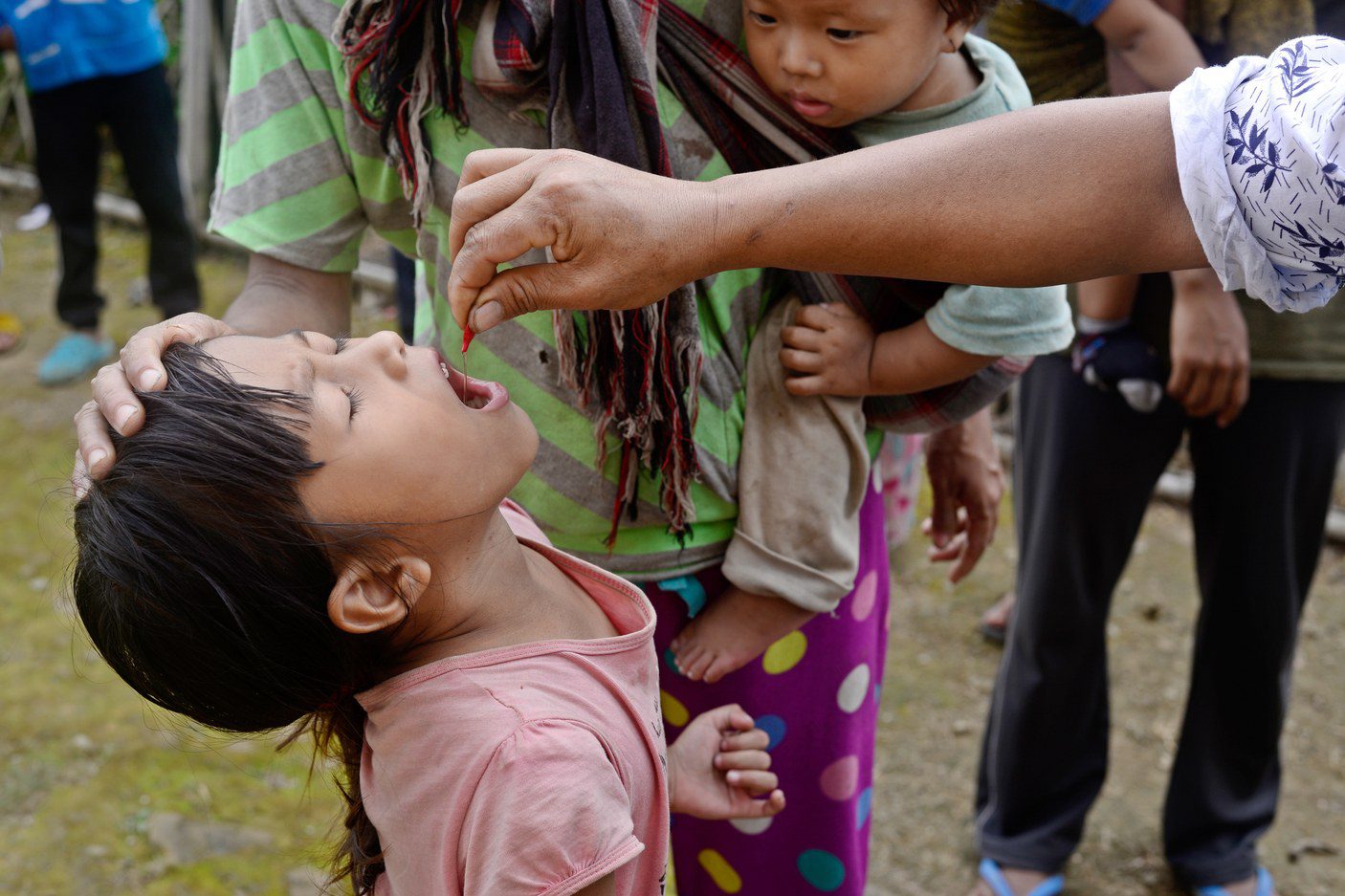
Vitamin A is essential to children’s health and development, supporting healthy growth, immune function, and vision. Globally, as many as 500,000 children become blind each year due to vitamin A deficiency, and half of those who lose their sight die within one year. Twice-yearly vitamin A supplementation (VAS) can reduce the risk of mortality among children under five by as much as 24%.
In Nagaland, a state in northeastern India spread across mountainous terrain and often remote areas, reaching every child with essential health services, including VAS, requires strong local health systems, trusted and well-equipped community health workers, and families who have the information they need to regularly seek health services.
Despite a steady supply of vitamin A at health facilities, VAS coverage in Nagaland remains below the national average. According to the National Family Health Survey-6 (2023-24), 56.5% of children 9-35 months in the state had received vitamin A in the preceding six months, compared with 74% nationally.
To better understand this gap, Vitamin Angels partnered with the National Health Mission (NHM), Nagaland, to implement Mission 9 by 5, a pilot initiative across 34 health facilities and around 9,000 children under five in Dimapur, Niuland, and Chümoukedima. The goal is to help every child receive all nine recommended doses of vitamin A, one every six months between the ages of nine months and five years.
As part of Mission 9 by 5, the partners have developed a social and behavior change (SBC) campaign, “Complete Protection: Vaccination + Vitamin A Up to 5 Years.” The campaign is designed to address barriers to awareness and follow-up and help more families stay on track with their children’s doses.
Insights from families shape practical, people-centered solutions
A formative study conducted in 2025 with caregivers, frontline health workers, and government officials revealed an important finding: families generally understand and trust the health services available to them. More than 90% of caregivers surveyed considered vitamin A important and safe for their children, and nearly all expressed trust in the health workers providing vitamin A and vaccines.
The challenge was awareness and follow-up. Nearly three in four caregivers had limited knowledge about vitamin A, including how often children should receive it and when their next dose was due.
Community interactions highlighted important behavioral barriers. Vitamin A supplementation often lacked a distinct identity and was overshadowed by the perceived importance of vaccines. Moreover, the risks of missing a dose were largely invisible to caregivers, making it difficult for them to understand the need for timely and continued supplementation.
These insights helped identify the key behavioral and service-delivery gaps that needed to be addressed to improve the uptake and completion of all nine doses. Rather than focusing solely on VAS availability, Vitamin Angels and NHM Nagaland saw an opportunity to strengthen communication, counselling, and follow-up.
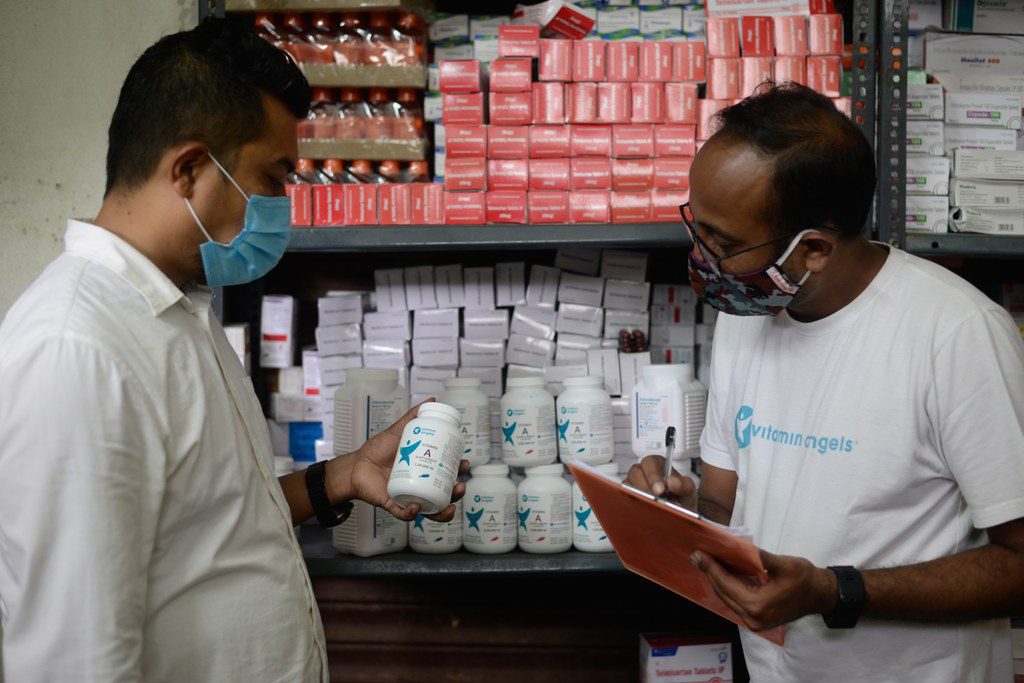
Through a human-centered design process, Accredited Social Health Activists (ASHAs), Auxiliary Nurse Midwives (ANMs), Community Health Officers, and district and block officials came together to identify barriers and co-design practical solutions. The partners developed prototypes, tested them with caregivers and frontline health workers in the field, and refined the materials based on their feedback.
The result: a series of practical tools designed to fit into existing health services and everyday community interactions. They include health facility posters, take-home caregiver cards with information and a recipe for a vitamin A-rich meal, WhatsApp text and voice reminders ahead of immunization sessions, and an awareness video for social media. Health workers will also use updated immunization registers and redesigned Mother and Child Protection cards to record vitamin A doses and remind caregivers when the next one is due.
Together, these tools reinforce one central message to address the root causes of low VAS rates: Protecting a child’s health does not end with vaccination. Vaccines and vitamin A serve different but complementary roles in protecting children’s health, and both are important throughout the early years of life.
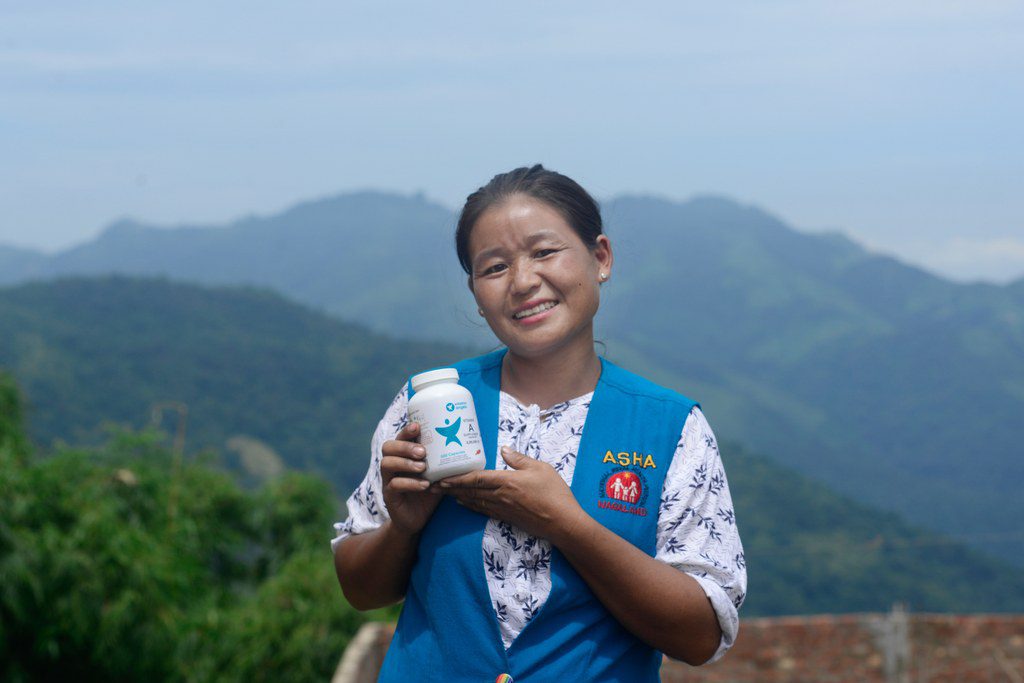
Strengthening systems to reach more children
Mission 9 by 5 is generating encouraging early results, with participating health facilities reporting a 10% increase in vitamin A doses administered the first nine months of this year compared with the same time period last year, before implementation. In 2026 alone, the initiative has also supported more than 100 supportive supervision visits to health facilities and immunization sessions, 70 community awareness sessions, and 112 visits to provide hands-on support to frontline health workers.
As NHM Nagaland launches the Complete Protection campaign, these locally developed tools are moving from testing toward wider implementation. The next phase will focus on learning lessons from the pilot, strengthening frontline worker training and community engagement, and identifying opportunities to expand the approach.
By working alongside government health systems, frontline health workers, and communities, Vitamin Angels helps identify barriers to effective program delivery and develop solutions that respond to local needs. In Nagaland, this means building on existing health services and trusted community relationships to help families understand the importance of vitamin A and remember when their children are due for a dose.
Through increased awareness, stronger counselling, and increased follow-up, NHM Nagaland, Vitamin Angels, and partners are working toward a shared goal: helping every child receive all nine recommended doses of vitamin A by age five.