
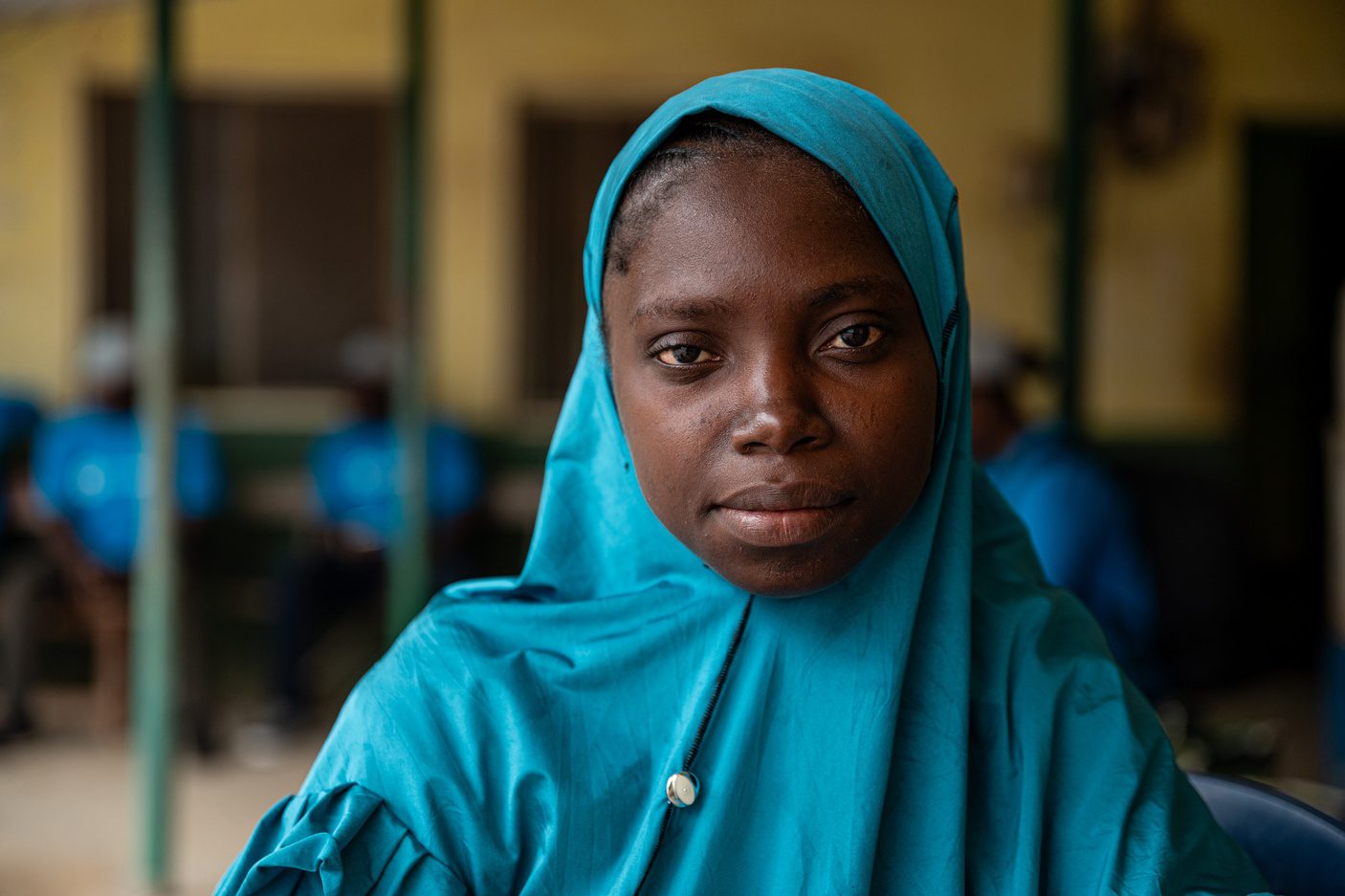
After losing her first baby, Fatima approached her next pregnancy with concern, but also hope. Access to multiple micronutrient supplementation (MMS), also known as prenatal vitamins and minerals, nutrition counseling, and coordinated care helped give her and her daughter a healthier start, while Nigeria builds the systems to bring proven maternal nutrition solutions to more women nationwide.
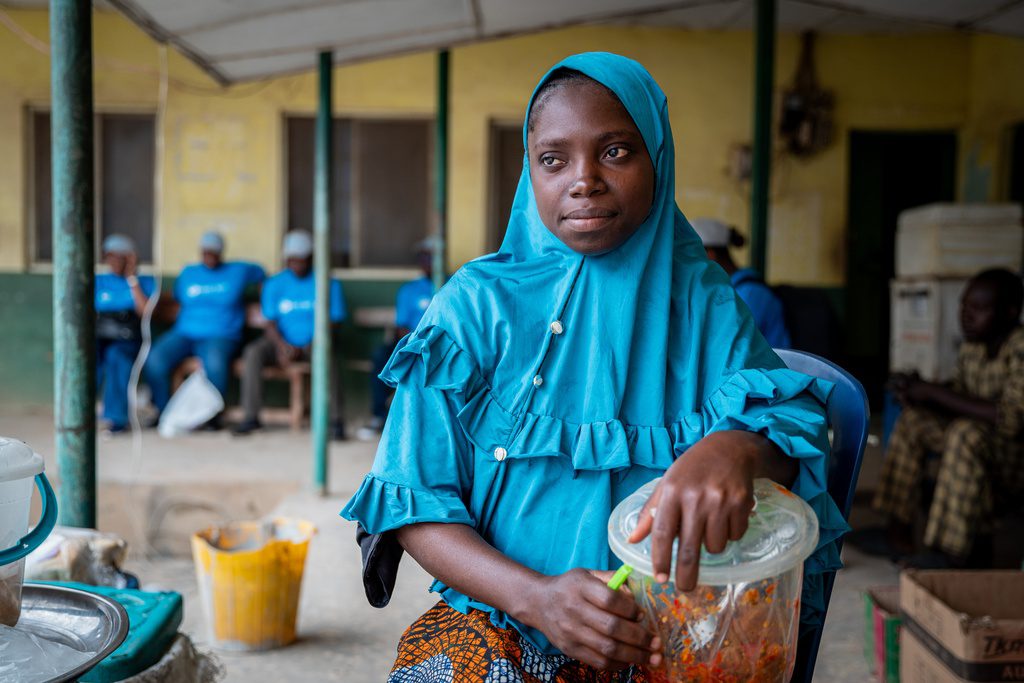
At her mother’s small stall outside Primary Health Care Okelele in Kwara State, Nigeria, Fatima helps sell koko, a local porridge.
The location is more than a place of work. It is also where Fatima, 25, was connected with nutrition and health services during her second pregnancy.
When members of the Vitamin Angels Nigeria team met Fatima during a field visit, they learned that she was pregnant and connected her with antenatal care. Through the health system, she received multiple micronutrient supplementation (MMS), known in the United States as prenatal vitamins and minerals, counseling on maternal nutrition, infant feeding, and routine child health services.
For Fatima, the pregnancy carried particular significance. Her first pregnancy had ended in the heartbreaking loss of her baby following an emergency cesarean delivery. When she became pregnant again, she wanted to do everything she could to give her child a healthy start.
I was four months pregnant when they gave me a bottle of MMS. I took one tablet a day. … It helped me sleep and eat well. This pregnancy was easier; I delivered my baby girl and she has not been sick since I gave birth to her.
A Proven Nutrition Solution During Pregnancy
Fatima’s experience reflects a much larger challenge facing women across Nigeria. Anemia remains one of the most persistent threats to a healthy pregnancy in the country, where an estimated 45% of pregnant women are anemic.1
At the same time, a growing body of global evidence has strengthened the case for MMS as an effective, cost-effective intervention to improve pregnancy and birth outcomes. Each daily MMS tablet contains 15 essential vitamins and minerals, including iron and folic acid.
Compared with iron and folic acid supplementation alone, MMS reduces the risk of low birth weight and small-for-gestational-age birth and can reduce the risk of preterm birth and stillbirth.2 3 Newer evidence also shows that prenatal MMS reduces the risk of several types of “small vulnerable newborns,” babies born preterm, small for gestational age, or with low birth weight, including combinations of these conditions associated with the highest risk of newborn death.4
The benefits can be particularly important for women who begin pregnancy with anemia. Among women who are anemic during pregnancy, MMS has been shown to reduce the risk of infant mortality through six months of age by 29%.3
MMS is also a highly cost-effective investment. Providing MMS costs an estimated $2 to $3 per pregnancy, while every $1 invested can generate an estimated $37 in economic returns through improved health and productivity.5
This evidence is the Science behind Vitamin Angels’ work and one reason Nigeria is moving toward MMS as a standard of care for pregnant women.
For Fatima, that evidence became meaningful through access to care. She attended antenatal services at Primary Health Care Okelele and Alagbado General Hospital. Counseling reinforced the importance of taking her supplements consistently and provided information on maternal nutrition, breastfeeding, complementary feeding, and care for her baby.
This time, her family was also better prepared for delivery. Because of her previous obstetric history, Fatima was referred early to a hospital and advised to plan for another cesarean delivery. Clear communication helped her family understand what to expect and mobilize the resources they would need.
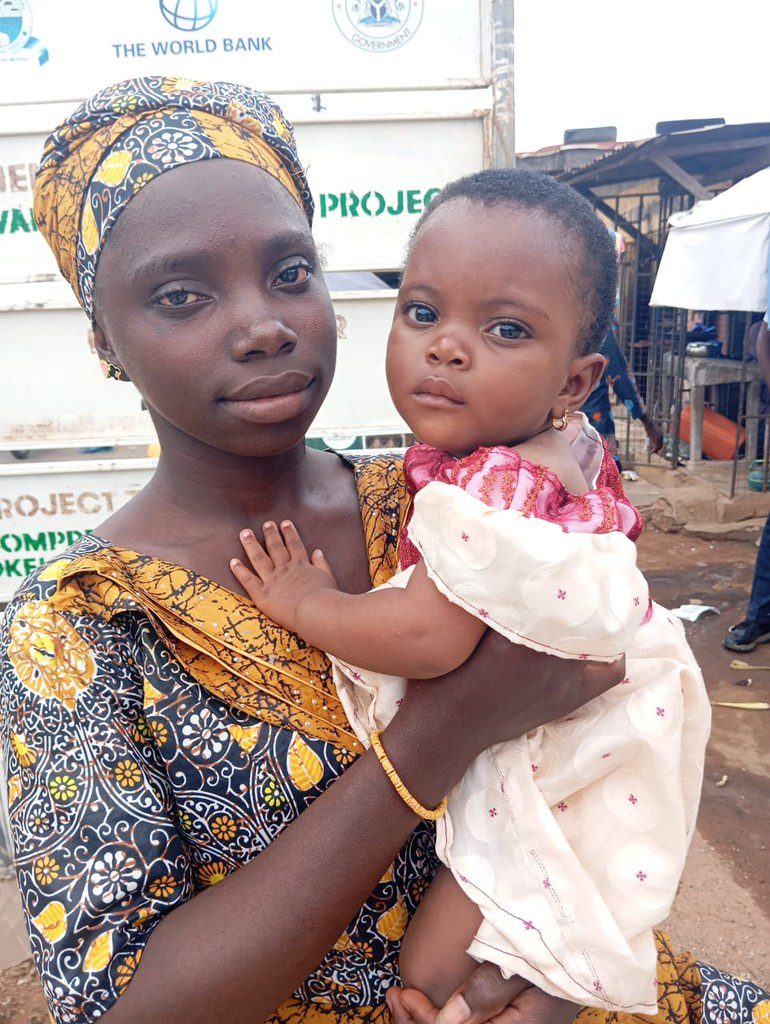
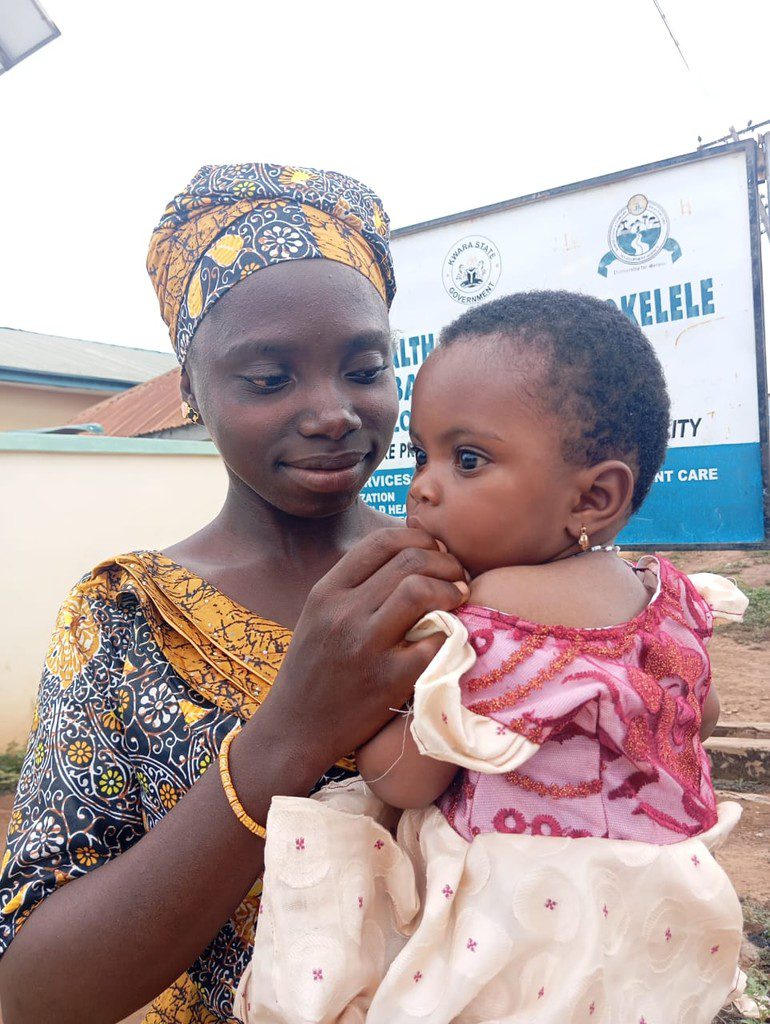
Fatima delivered a healthy baby girl.
Nutrition Across the Continuum of Care
The support did not end at delivery. Fatima received counseling on exclusive breastfeeding for the first six months and the introduction of appropriate complementary foods afterward. Her daughter was connected with routine growth monitoring and received vitamin A supplementation through the health facility.
Together, these services demonstrate the Systems at the heart of Vitamin Angels’ approach.
Nutrition interventions have the greatest potential when delivered in integrated systems. Antenatal care, maternal nutrition counseling, MMS, breastfeeding support, vitamin A supplementation, growth monitoring, referrals, and other essential services can reinforce one another when they are integrated into health systems that women and children can access throughout pregnancy and early childhood.
Health workers are central to making those systems work. Fatima remembers the encouragement she received not only from providers, but also from her husband and mother. Because her mother’s stall was located near the health facility, Fatima could more easily attend appointments, obtain supplements, and return for follow-up care.
Her story illustrates something simple but consequential: proven nutrition interventions can only make a difference when they reach the people who need them.
From One Mother to Millions
Fatima’s experience is also unfolding at an important moment for maternal nutrition in Nigeria.
Over several years, the Federal Ministry of Health and Social Welfare, Vitamin Angels, UNICEF, Nutrition International, and other partners have worked to strengthen the evidence, policy environment, coordination, and implementation needed to expand access to MMS. Vitamin Angels helped introduce MMS through non-state actors beginning in 2018 and has since contributed technical assistance, evidence generation, policy dialogue, partner coordination, capacity strengthening, and MMS donations as Nigeria’s national approach has evolved.
Vitamin Angels also worked alongside UNICEF and other public health partners to advocate for the provisional inclusion of MMS on Nigeria’s Essential Medicines List in 2022. As national coordination advanced, Vitamin Angels joined the National Task Force for MMS and the National Nutrition Technical Working Group, contributing technical guidance, policy and strategy review, training guidance, and partner coordination.
To support coordinated scale-up, Vitamin Angels commissioned the Country Composite Profile on MMS, developed in collaboration with the Federal Ministry of Health and Social Welfare and partners working through the Task Force. The profile created a shared picture of who was doing what and where, helping identify opportunities for alignment, reduce overlap, and make more efficient use of limited resources.
In December 2025, Nigeria launched its National Roadmap for the Rollout and Scale-up of Multiple Micronutrient Supplementation. The Roadmap establishes a 2030 target of reaching 70% of pregnant women attending antenatal care with MMS. It provides a framework for integrating MMS into national systems, including the Essential Medicines List, supply chains, and health information platforms.
The next challenge is Scale: translating national policy into reliable access for women in communities across Nigeria.
That means supporting state-level adoption and implementation, strengthening health-worker capacity, integrating MMS into supply chains and health information systems, mobilizing sustainable financing, and helping build realistic plans that can be sustained with domestic resources. Vitamin Angels works with federal, state, and local government counterparts and other partners to introduce, strengthen, and scale MMS through routine health systems.
It connects these three dimensions: Science. Systems. Scale. that can transform a proven nutrition intervention into lasting change.
Science identifies what works.
Systems help ensure that women like Fatima can receive those interventions alongside quality care and counseling.
Scale means building the policies, financing, supply chains, trained workforce, and delivery infrastructure needed so that access does not depend on where a woman lives.
A Healthier Beginning
Today, Fatima talks about her daughter with the relief and pride of a mother whose second pregnancy brought a very different outcome from her first.
Fatima’s experience cannot be attributed to any single intervention. It reflects the value of a continuum of support: nutrition, antenatal care, counseling, referral, family preparation, safe delivery, and continued services for her child.
That is also what makes her story significant. Across Nigeria, millions of women need access to proven nutrition interventions and quality care during pregnancy. Fatima’s experience offers a glimpse of what that can look like for one family—and why strengthening the systems that deliver these services matters for millions more.
Vitamin Angels works to improve nutrition by advancing proven solutions, strengthening the systems that deliver them, and supporting sustainable scale. In Nigeria, that means helping turn the promise of better maternal nutrition into something women can experience where it matters most: in their own pregnancies, families, and communities.
References
- World Bank. “Prevalence of anemia among pregnant women (%), Nigeria.” Global Health Observatory/WHO. ↩︎
- Keats EC, Haider BA, Tam E, Bhutta ZA. Multiple-micronutrient supplementation for women during pregnancy. Cochrane Database of Systematic Reviews. 2019;(3):CD004905. doi:10.1002/14651858.CD004905.pub6. ↩︎
- Smith ER, Shankar AH, Wu LS-F, et al. Modifiers of the effect of maternal multiple micronutrient supplementation on stillbirth, birth outcomes, and infant mortality: A meta-analysis of individual patient data from 17 randomised trials in low-income and middle-income countries. The Lancet Global Health. 2017;5(11):e1090-e1100. ↩︎
- Wang D, Liu E, Perumal N, et al. The effects of prenatal multiple micronutrient supplementation and small-quantity lipid-based nutrient supplementation on small vulnerable newborn types in low-income and middle-income countries: A meta-analysis of individual participant data. The Lancet Global Health. 2025;13:e298-e308. ↩︎
- Larsen B, Hoddinott J, Razvi S. Investing in nutrition: A global best investment case. Journal of Benefit-Cost Analysis. 2023;14(S1):235-254. ↩︎