
How Nigeria Built a National Roadmap to Make MMS the New Standard of Care
Nigeria developed its National Roadmap for the Rollout and Scale-up of Multiple Micronutrient Supplementation (MMS) through a collaborative, evidence-based approach led by the Federal Ministry of Health and Social Welfare (FMoHSW). The strategy successfully shifted care standards from traditional iron-folic acid to MMS.
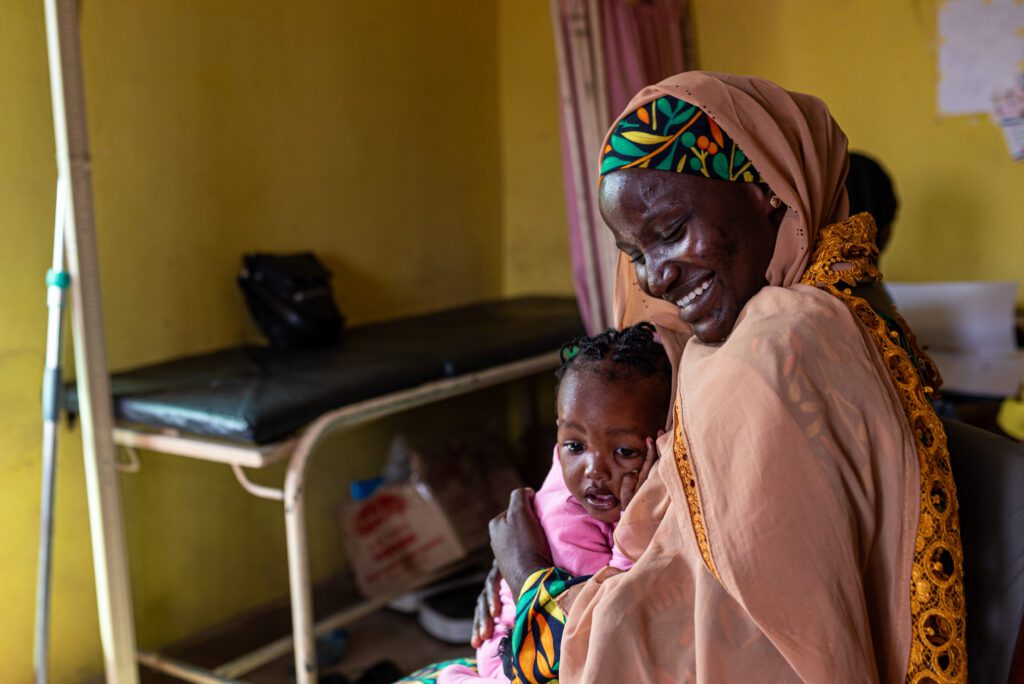
Before Nigeria adopted a national policy on multiple micronutrient supplements (MMS), known in the United States as prenatal vitamins and minerals, momentum was already building. Beginning in 2018, Vitamin Angels introduced MMS through non-state actors, contributing to early implementation informed by emerging evidence and World Health Organization guidance. Nutrition International also supported early implementation efforts.
A Ministerial Order endorsing MMS for pregnant women soon followed, signaling growing government commitment while early implementation was still evolving. At the same time, partners were piloting approaches, supporting donations, and generating practical lessons, but without a unified national strategy. These early efforts laid the foundation for the government-led roadmap that would guide coordinated national scale-up.
The Case for MMS
Anemia is one of the most persistent threats to a healthy pregnancy in Nigeria, where an estimated 45 percent of pregnant women are anemic.1 MMS offers a direct, evidence-based response: a powerful, proven, and cost-effective tool for combating maternal malnutrition and improving pregnancy and birth outcomes in low-resource settings as part of routine antenatal care. Each daily tablet contains 15 essential vitamins and minerals, including iron and folic acid. While iron and folic acid (IFA) supplementation remains important, MMS has proven more effective and acceptable with better adherence.2 Compared with IFA alone, MMS reduces the risk of low birth weight, preterm birth, and stillbirth, lowers the risk of stunting in early infancy, and decreases six-month infant mortality.3
Building Alignment for National Scale
In the early 2020s, momentum around MMS in Nigeria continued to grow, supported by strong government leadership and important contributions from partners across the nutrition and maternal health ecosystem. Organizations including Vitamin Angels, UNICEF, and others were generating evidence and supporting programming to better understand the introduction and scale up of MMS in Nigeria. Vitamin Angels’ landscape analysis in Adamawa and Edo contributed to this broader evidence base.
As implementation advanced, states moved at different paces based on their priorities, readiness, and access to MMS. Osun and Ondo committed to transitioning from IFA to MMS, while others used both during the transition or continued with IFA because supplies were inconsistent. This uneven progress reflected growing commitment to maternal nutrition but also highlighted the need for stronger coordination, shared learning, and consistent guidance for scale-up.Together, these efforts reflected growing national and subnational commitment to improving maternal nutrition, while also underscoring the need for stronger coordination, shared learning, and aligned implementation guidance to support a more consistent path to scale.
This growing momentum led to the establishment of the National Task Force for MMS. Inaugurated to strengthen coordination and support a unified national approach, the Task Force brought government, implementing partners, technical agencies, and other critical stakeholders into one shared platform. Its mandate included resource mobilization, monitoring and evaluation, capacity building, advocacy, and communication, augmenting the Nutrition Department of the FMOH&SW, while bringing critical stakeholders into one room.
Pioneer and coordinator
Vitamin Angels contributed to this broader foundation alongside government and partner efforts. Vitamin Angels worked alongside UNICEF and other public health partners to advocate for the provisional inclusion of MMS on Nigeria’s Essential Medicines List in 2022. Earlier, it also convened an informal nutrition community of practice with support of the FMOH&SW, helping create space for partner dialogue and shared learning ahead of the formal coordination structures that followed.
As national coordination advanced, Vitamin Angels was included in the National Task Force for MMS and the National Nutrition Technical Working Group. Through these platforms, Vitamin Angels contributed technical guidance, policy and strategy review, partner coordination, training guidelines, and MMS donations, working as part of a wider ecosystem committed to improving maternal nutrition.
To support the Task Force’s coordination mandate, Vitamin Angels commissioned the Country Composite Profile on MMS (MMS-CCP), developed in collaboration with the FMOH&SW and partners working through the Task Force. The MMS-CCP created a shared picture of who was doing what and where, helping partners identify opportunities for alignment, reduce overlap, and make more efficient use of limited resources. Vitamin Angels provided the technical and financial support to help move this work forward, while ensuring it reflected the priorities and contributions of the broader MMS community in Nigeria.
A Government-Owned Roadmap
In December 2025, the Coordinating Minister of Health and Social Welfare, Prof. Muhammad Ali Pate, launched Nigeria’s National Roadmap for MMS alongside the MMS-CCP at the National Micronutrient Conference in Abuja. The Roadmap sets a 2030 target of reaching 70 percent of pregnant women through antenatal care with MMS. Vitamin Angels supported this initiative by helping develop the MMS-CCP, contributing to the Ministry’s Taskforce, and facilitating the integration of MMS into the public health system.
Three costed implementation plans outline action at the federal, primary-care, and state levels, providing a foundation for mobilizing domestic financing and aligning partner support. The Roadmap also integrates MMS into national systems, including the Essential Medicines List, supply chains, and health information platforms, to support long-term sustainability.
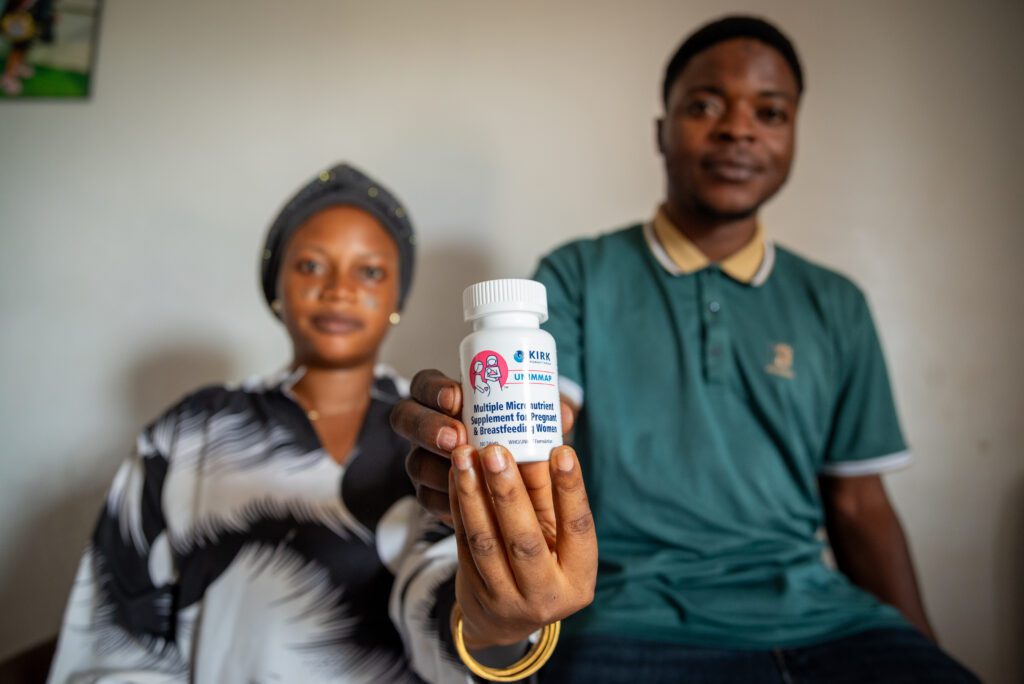
The next phase is focused on state-level adoption and implementation. Each state will develop a costed plan tailored to its priorities, capacity, and resources, while exploring sustainable financing options, including interim state procurement as Nigeria works toward local MMS manufacturing. Donors and technical partners, including Vitamin Angels, will continue to provide technical assistance, contribute state-level evidence, help make the investment case for local buy-in, and support realistic plans aligned with domestic financing opportunities. Through systems-strengthening efforts, including health-worker capacity building and support to national logistics and health-information systems, Vitamin Angels is working with key government stakeholders and relevant partners to help states carry their plans forward over the long term.
Nigeria’s journey from early partner-led implementation to a national policy framework and state-led scale-up reflects a clear goal: expand access to MMS while building the systems needed to sustain it.