
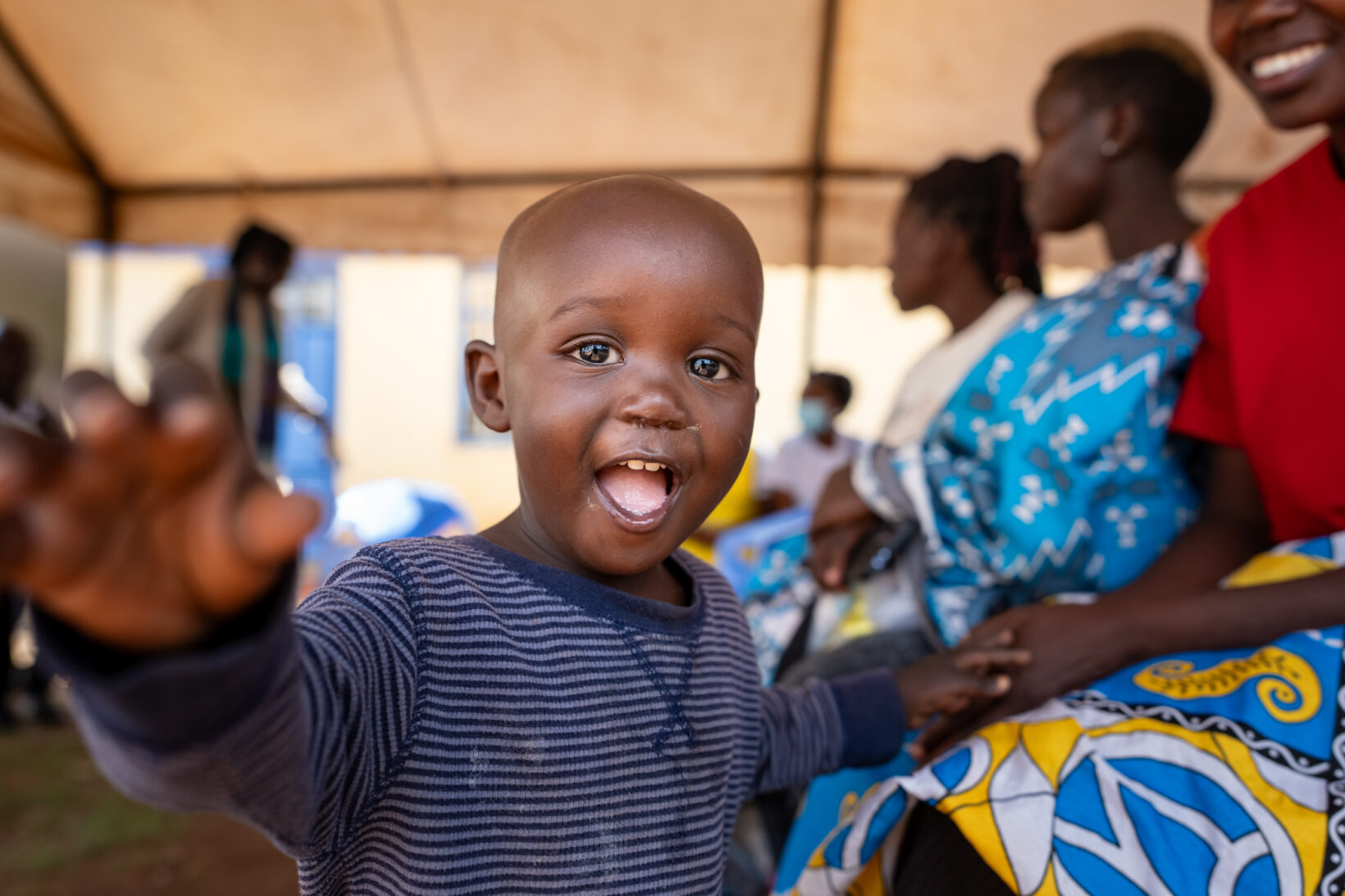
A Dose of Hope
In Kenya, near-universal coverage of iron and folic acid supplementation has been masking a maternal anemia crisis. Vitamin Angels is working with the Makueni County Government to roll out a solution, building a model for Kenya and Africa in the process. The following story is based on an interview with Dr. Lucy Kanya, Senior Technical Director for Africa.
In Kenya, nearly every pregnant woman who walks into an antenatal clinic leaves with iron and folic acid (IFA), the standard treatment for anemia. In some counties in Kenya, coverage exceeds 90 percent. By that measure, the system is working.
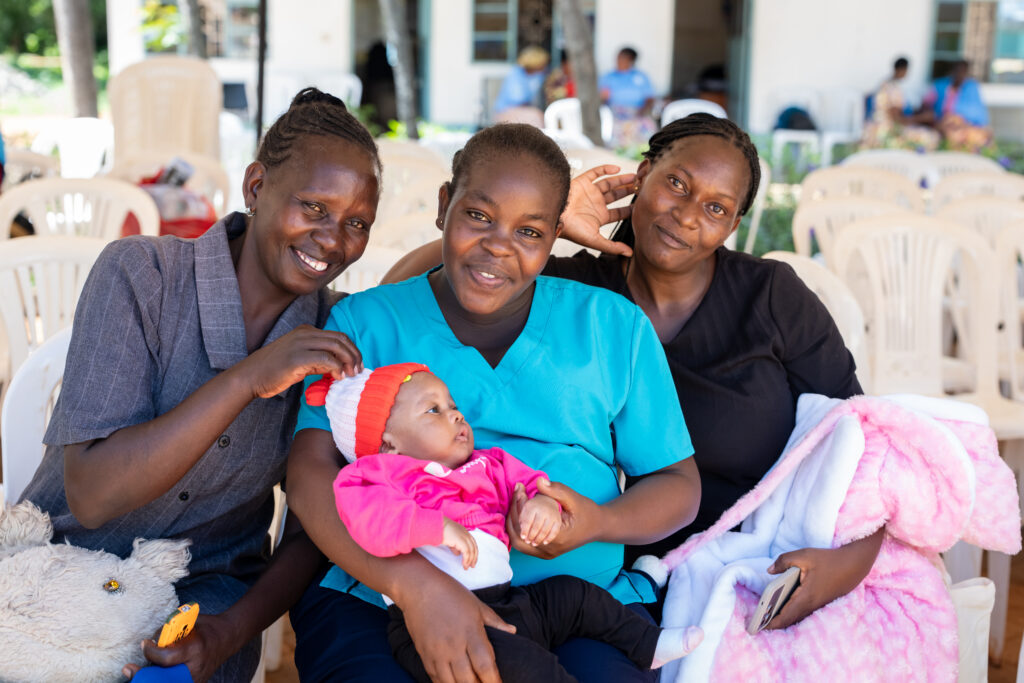
The outcomes tell a different story. More than 40 percent of pregnant women in Kenya remain anemic; in parts of Makueni County, the figure climbs past 50 percent. “We have very high coverage of iron and folic acid, and yet maternal anemia is very high,” says Dr. Lucy Kanya, Senior Technical Director for Africa at Vitamin Angels. “There is a gap. We say we are giving iron and folic acid, but at the end of it, it does not seem to be addressing what we wanted to address.”
That gap has consequences. Anemic mothers face a higher risk of postpartum hemorrhage. Their babies are more likely to be born premature, too small, or not at all. “No one wants their mother to walk into the labor ward and not come back,” Dr. Kanya says. “We all get pregnant because we want a baby. A healthy baby.”
Iron and folic acid were never going to be enough, Dr. Kanya argues, not in regions where food insecurity is a fact of life. Many of the communities Vitamin Angels serves sit in Kenya’s arid and semi-arid lands, where erratic rains make a balanced diet a luxury. Women arrive at pregnancy already depleted, carrying deficiencies they cannot see. “The mother looks okay, physically,” Dr. Kanya says. “But she is actually nutrition-deficient in many ways. This is hidden hunger.”
But a proven solution exists. Multiple micronutrient supplement, or MMS, contains fifteen essential nutrients, including the iron and folic acid women already receive. The World Health Organization recommends it and clinical evidence supports it.
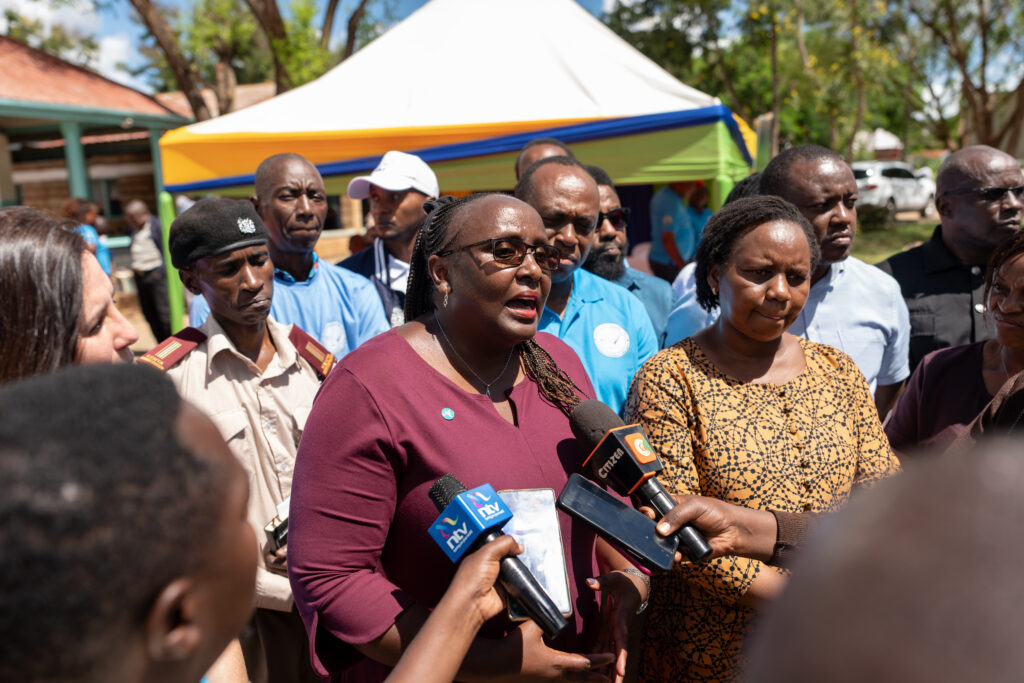
“From where I sit, and from the communities I work with, MMS is simply hope. It’s a dose of hope.” Dr. Lucy Kanya, Senior Technical Director for Africa
The clearest test of that conviction is unfolding in Makueni, a county roughly three hours from Nairobi that learned of Vitamin Angels’ work to improve maternal health and approached the organization for a solution. Its then health minister, Dr. Paul Musila, a pediatrician, had watched preterm births and infant losses mount, and engaged directly with the evidence. “He said, ‘We will do whatever it takes. Work with us. We are ready,’” Dr. Kanya recalls.
Rather than simply delivering a product, the team used an implementation-science approach: mapping stakeholders, from the governor, to healthcare workers, and the woman taking the supplement, and conducting formative research to understand why women were not benefiting from supplements they already received. The answers were in its acceptability and the environment around them: a metallic taste, forgetting to take the pills, a lack of support at home, not understanding why the pill mattered. “Sometimes we scientists look for very big solutions,” she says. “But these solutions are simple. There is no medication for forgetting, but there is conversation around how we support you not to forget.”
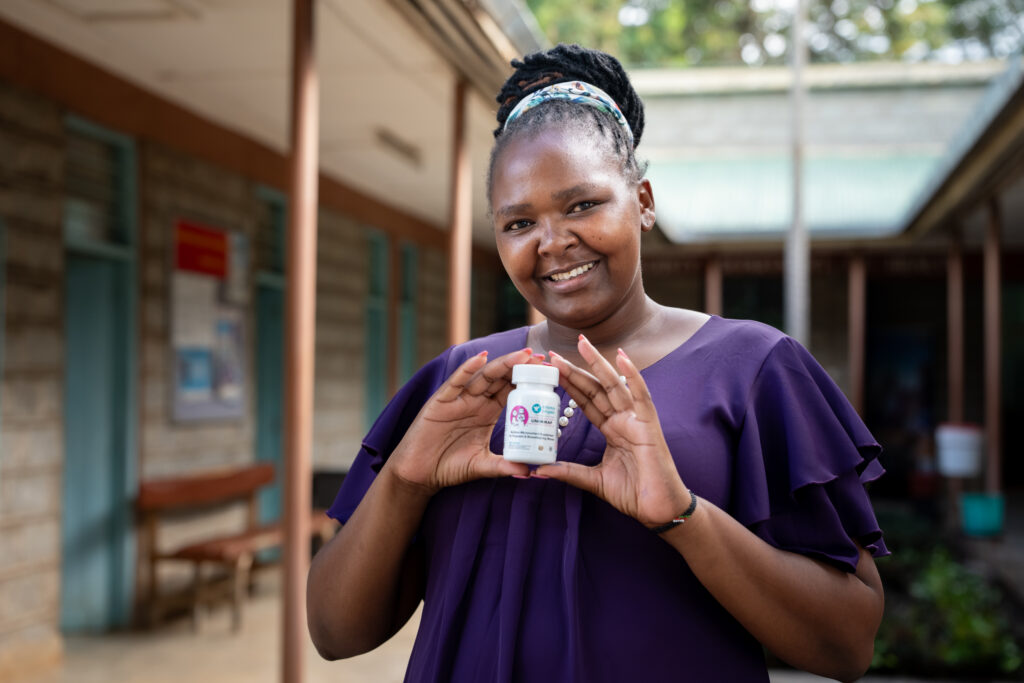
They also found demand. Ninety-six percent of community members said they would accept MMS. Health workers, who hand out iron and folic acid knowing there is a stronger alternative, were ready to switch. “They feel helpless. They are giving out iron and folic acid. They know it is not enough,” Dr. Kanya says. “And so MMS offers that hope.”
For Dr. Kanya, Makueni is not the point, it is the proof. “Makueni simply mirrors the national situation,” she says. The barriers there are the barriers everywhere, and so are the solutions. “When the woman in Makueni spoke to us, she spoke for the women of Kenya. She spoke for the women of the 47 counties in this country. She spoke for the many women across this continent.”
That continental ambition is why she insists the work runs through government rather than around it. “The government system lasts beyond all of us,” she says. “When all the partners are gone, the government stays. And who is the government? It is the people.” In Kenya, she notes, the constitution is unambiguous: health is a right for all. A parallel system would be more expensive, less efficient, and less enduring than strengthening the one mothers already trust.
Beneath the strategy is an argument she returns to with unmistakable urgency: when a proven tool exists, inaction is not neutral. “We shouldn’t be talking about stunting in this day and age. It’s unfair. We should not be talking about maternal anemia,” she says. Developed countries, she points out, have long moved on to other concerns. “Treatment is a good option. But treatment should be the last option. Prevention is the first option.”
She frames MMS, finally, as a matter of equity and a chance to level a playing field tilted before birth. “Why should my child be sitting in the same class as a child who started off poorly in life, whose abilities are already compromised? It’s an equalizer.”
And then, more plainly: “If something is working, it is truly unfair and unethical not to make it available.” For the mothers of Makueni, and the women Dr. Kanya believes they speak for, the supplement is already here, with proven evidence, and approved by the World Health Organisation. The only question left is whether it reaches the women who need it. “We can’t hold it back from women,” she says. “It’s the least we can do.”