
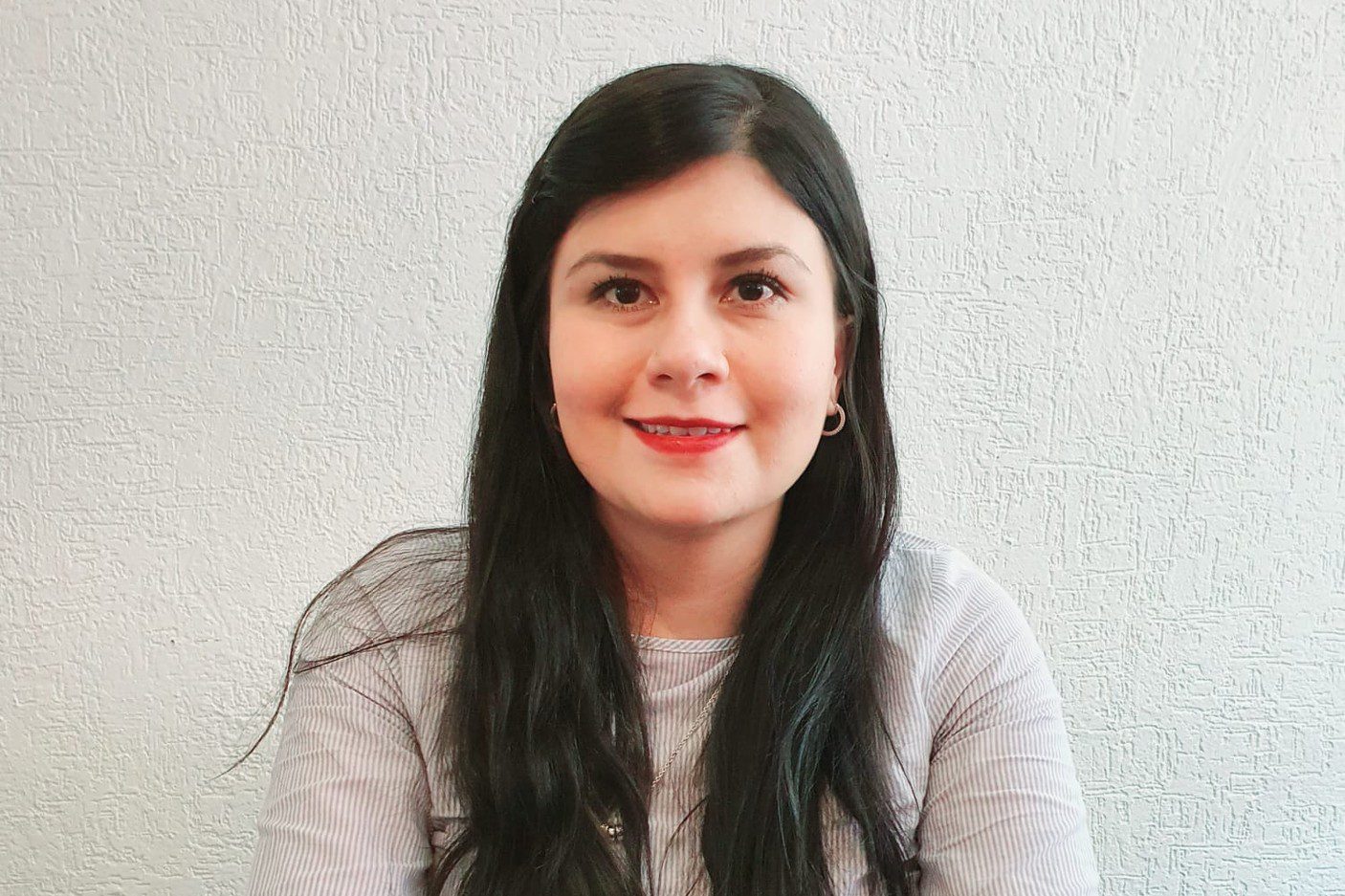
Ahead of the XXI Latin American Congress of Nutrition in Santiago, Chile, Vitamin Angels’ Mexico Technical Advisor shares what families in Oaxaca and health workers in Morelos taught her about closing the gap between knowing and doing.
When caregivers in Oaxaca, Mexico, hold back on feeding eggs, chicken, or thicker foods for their babies, Selene Pacheco-Miranda, MD, PhD, does not see a lack of will.
“It’s not resistance from the caregivers,” she said. “When we agreed on small, doable actions with families, almost everyone tried them and wanted to continue.”
Pacheco-Miranda is Vitamin Angels’ Mexico Research Coordinator, a physician and public health researcher who studies what happens between a proven nutrition intervention and the families it is meant to reach. Later this month, she brings two Vitamin Angels studies from that work to the XXI Latin American Congress of Nutrition (SLAN 2026), held Oct. 25-29 in Santiago, Chile, under the theme “Transforming Food Systems in Latin America: From Evidence to Action.”
She will present a poster detailing the results of a study on improving complementary feeding practices for children aged six months to 23 months in Oaxaca. On Oct. 29, she joins speakers from UNICEF Mexico, Mexico’s National Institute of Public Health (INSP), the Institute of Nutrition of Central America and Panama (INCAP), and
The Analysis Center – Ecuador Crece Contigo for a symposium on implementation science in nutrition during the critical period from pregnancy through a child’s second birthday known as the first 1,000 days.
“I work in all the phases of a project,” she said, from writing the study protocol and data collection tools to analyzing results and sharing what the team learns. “My work has focused on maternal and child nutrition.”
Listening to the whole family
Vitamin Angels’ poster, “Barriers and Facilitators for the Adoption of Appropriate Complementary Feeding Practices in Children Under Two Years of Age in Mexico,” shares findings from a study Vitamin Angels conducted with INSP and Un Kilo de Ayuda, a longtime program partner with deep experience working with families in Oaxaca. The team explored how families in rural and urban areas of Oaxaca feed children six to 23 months old.
“We chose Oaxaca for two reasons,” Pacheco-Miranda said. “First, the need. Almost one in four children under five is stunted, and this proportion is much higher than the national average. Second, the opportunity. We have strong partners, like the organization Un Kilo de Ayuda, that are already working in these communities.”
An earlier phase of formative research illustrated specific feeding practices that could be improved. “The children got eggs and meat late and also ate a lot of watery broth,” she said, pointing out that these practices did not give children optimal nutrition for their age.
The researchers interviewed both parents – not just mothers – in addition to other critical caregivers including grandmothers. “We know that feeding decisions involve the whole family,” she said.
Grandmothers often play a central role. “Grandmothers can motivate their daughters and daughters-in-law to adopt appropriate complementary feeding practices,” she said. “They spend a lot of time caring for the children. Sometimes they are the ones in charge of their care.” Fathers, she added, can provide critical support at home, “reminding the mother which foods to look for so the child’s diet can be varied and healthy.”
The gap between knowing and doing
The study focused on three practices: daily eggs and chicken; thicker meals with added vegetables, chicken, or beans; and responsive feeding. Families valued all three. Adoption still lagged.
“It’s a mix of things,” Pacheco-Miranda said. “First, cost and access. Chicken is an expensive food for them. Second, beliefs. For example, the belief that eggs have too much cholesterol or cause allergies, and that beans stick in the stomach. And third, daily life situations, like a sick child, travel, or sometimes the lack of time.”
Fear as a form of care
Some of the strongest barriers came from worry, especially the fear that a baby might choke on solid foods. Pacheco-Miranda treats fear as a starting point, not an obstacle.
“Behind the fear that the child might choke, there is a mother, a worried grandmother,” she said. “What worked for us was to listen to these concerns and give mothers and grandmothers a safe way to introduce certain foods.”
That meant practical guidance: mashed beans, chicken cut into pieces, and vegetables cut small, with a texture suited to the child’s age. “When they saw that the babies ate these foods well, and that the foods did not hurt them, the fear went away,” she said. “Your own experience can convince more than any message.”
Building on what families already do
The same approach shaped how the team handled broths, known locally as calditos, which many families in Oaxaca serve young children often.
“Broth is easy to make, and children really like it,” she said. “Many caregivers think it gives children all the nutrients they need.”
However, traditional calditos are thin and watery, providing little protein and nutrients. Instead of asking families to stop, the team asked them to add. “We asked families to keep serving broths, but include solid foods like chicken, mashed beans, and vegetables in the right consistency for the age,” she said. “Nine out of 10 mothers tried it. When they saw their children eat these foods without problems, they felt more confident and more comfortable.”
Asked what a counseling program in Oaxaca should prioritize, she was specific. “First, counseling with follow-up. Families say this is what helps them most,” she said. “Second, start with foods like eggs. They are cheap, quick, and often available at home. And third, involve the whole family. Grandmothers as champions, fathers as support.” She added that programs should be honest with families about the cost of foods and offer low-cost options.
Two chapters of one story
Pacheco-Miranda’s second study starts earlier, during pregnancy. She sees the two as one continuous story about the first 1,000 days, from pregnancy through breastfeeding to the introduction of solid foods at six months and up to 23 months of age.
“They are part of the same story,” she said. “The interventions are highly acceptable to the people who receive them, but sometimes they do not arrive in the way that is expected,” because of a lack of time, materials, supplies, training, or support.
That gap is why she focuses on implementation science, which asks not only whether a nutrition intervention is effective, but whether it reaches people as intended.
Inside prenatal care in Morelos
At the Oct. 29 symposium, Pacheco-Miranda will present an evaluation of how nutrition services during pregnancy are delivered in primary care in the state of Morelos. The team studied 16 rural and urban health facilities and four interventions: prenatal micronutrient supplements; assessment of nutritional status; counseling on healthy eating; and counseling on physical activity.
“The acceptability of these interventions was very high,” she said. “For example, more than 90% of the health workers support prescribing micronutrient supplements. However, the implementation was incomplete and varied across the facilities.”
Women valued prenatal vitamins and minerals, too. “They went to their appointments on time to pick up their supplements,” she said. In rural areas, even when some relatives raised doubts, “they returned to the health units to resolve their questions and continued, because they knew it was good for them and for their babies.”
Seeing the whole picture
The team combined surveys, in-depth interviews, observations of prenatal visits, and medical record review. Each method revealed something the others could not.
“The surveys showed what health workers think, and it was very positive,” she said. “But observations showed what really happens in the visit. For example, only one in five visits explained why supplements are important…With one method, we cannot have the whole story.”
The barriers, she found, sit in several places at once. “The national guidelines are not clear or up to date. There are supply shortages. Some women buy the supplements with their own money,” she said. “The visits are short, about 15 to 20 minutes, and the workload is high. Only one in four health workers have training on nutrition, and many women start prenatal care late.”
For women, that can mean long waits. “Many times they have to stay at the health unit for up to two hours to receive care,” she said. “When there is no [supplement available], they have to buy it themselves.”
Recognizing health workers
Pacheco-Miranda is clear that health workers are not the problem.
“They have very hard jobs, but they really care about nutrition and are open to improving prenatal care,” she said. “They ask us for practical training, simple materials to support counseling, more time in each visit, and a steady supply of supplements.”
What surprised her was how much they already knew. “They knew a lot about this intervention, even if they don’t have constant training,” she said. “The knowledge is there, but the problem is the tools and the time.”
From evidence to action
For decision-makers, Pacheco-Miranda’s message is direct. “Very often, the discussion focuses on health personnel,” she said. “This study shows us that the problem is not acceptance, or a lack of willingness among health personnel to implement these interventions. The challenge is in the health system itself.”
Her first priority is clear, up-to-date national guidelines, better aligned with national and international prenatal care standards, especially on MMS. Next come the resources to follow them: MMS that is always in stock “so that women don’t have to pay out of pocket,” practical and continuous training, counseling materials, and supportive supervision. “We have to provide health personnel with the optimal conditions so [services] can be delivered in the best way,” she said.
She expects much of this to resonate beyond Mexico. “The high acceptability, and barriers like the lack of time and training, and unclear guidance, have also been seen in countries like Bangladesh, Ethiopia, and India,” she said. “What is more specific to Mexico is the double burden of malnutrition. We have anemia, but also excessive weight gain, together in pregnant women, and a health system in transition.”
Those lessons matter for Vitamin Angels, which works with program partners to reach 74 million women and children each year in 57 countries, often within health systems facing similar constraints.
“It is not enough to have good interventions, or to know that these interventions work,” Pacheco-Miranda said. “You have to ensure that women and families receive them in the way that is expected and, above all, that they reach those who need them most.”
The Oct. 29 symposium will bring together experts from regional institutions to share experiences and lessons learned from implementing nutrition interventions during the first 1,000 days, including micronutrient supplementation during pregnancy. Vitamin Angels will contribute to this exchange, exploring how evidence from different settings can help strengthen maternal and child nutrition across Latin America.
Learn more about SLAN 2026, and follow Vitamin Angels on LinkedIn for updates from SLAN 2026.