
UNIMMAP MMS
A Proven, Safe, Affordable, and Effective Nutrition Intervention for Enhanced Maternal and Child Health
Updated May 12, 2026
Vitamin Angels: Reaching Those Who Need It Most
Founded in 1994, Vitamin Angels is a global health nonprofit that aims to save lives and improve the health of women and children most at risk through proven nutrition solutions. Today, Vitamin Angels reaches 74 million women and children annually across 65 countries through an extensive network of partners.
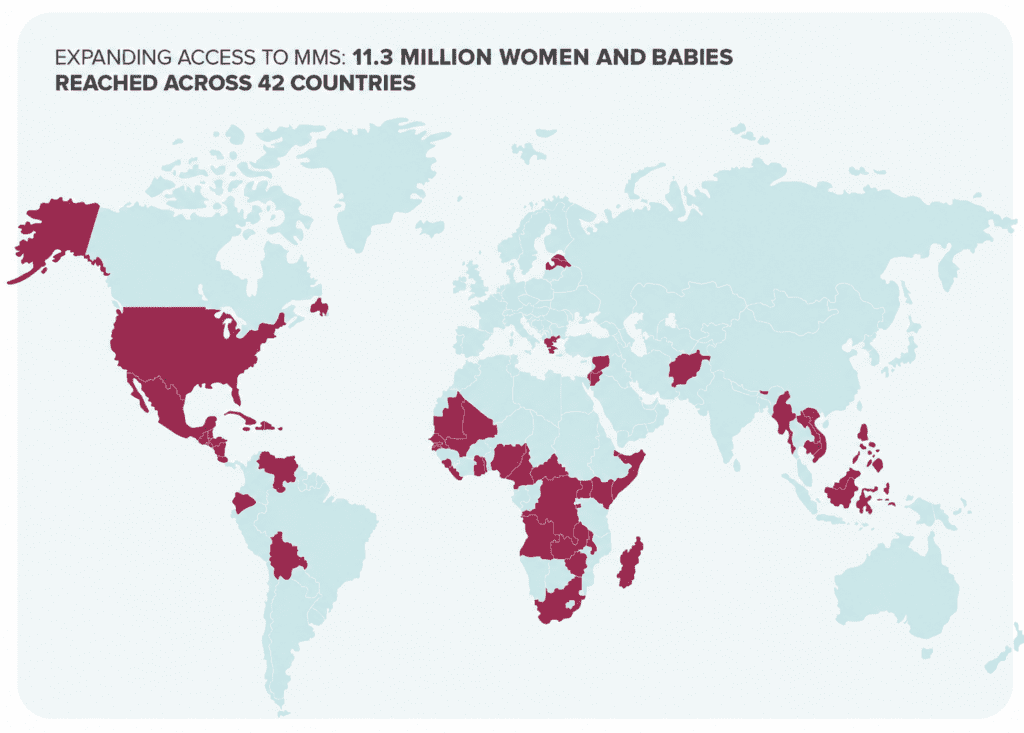
Central to Vitamin Angels’ work is the delivery of multiple micronutrient supplementation (MMS), commonly known as prenatal vitamins and minerals, to underserved pregnant women. In 2025 alone, Vitamin Angels reached more than 11 million women and babies with MMS in 42 countries, representing a significant portion of the MMS delivered around the world.
Vitamin Angels’ vision is clear: a world where every woman and child has the health and support they need to thrive. MMS is one of the most powerful and proven tools available to help make that vision a reality.
The Challenge: Nutrition Gaps During Pregnancy
Pregnancy dramatically increases a woman’s nutritional needs, yet diet alone often cannot meet them.2 For women in low- and middle-income countries (LMICs), where many are already micronutrient deficient before becoming pregnant, this gap can have life-threatening consequences.3
Globally, two in three women of reproductive age have at least one micronutrient deficiency.3 Pregnant women in LMICs are at an increased risk of deficiency in a variety of vitamins and minerals, including vitamins A, C, D, E, thiamine, riboflavin, niacin, B6, folic acid, B12, and the minerals iron, zinc, iodine, copper, and selenium.4
Anemia, often caused by iron deficiency, affects 36% of pregnant women globally and increases the risk of death from postpartum hemorrhage, the leading cause of maternal mortality.5 Iron deficiency anemia also drives adverse birth outcomes including preterm delivery and low birth weight.6 Children born to undernourished mothers are more likely to experience poor physical and cognitive development, limiting their potential as adults.7 Undernutrition during pregnancy can create an intergenerational cycle of health and economic disparity felt across communities and generations.
What is UNIMMAP MMS?
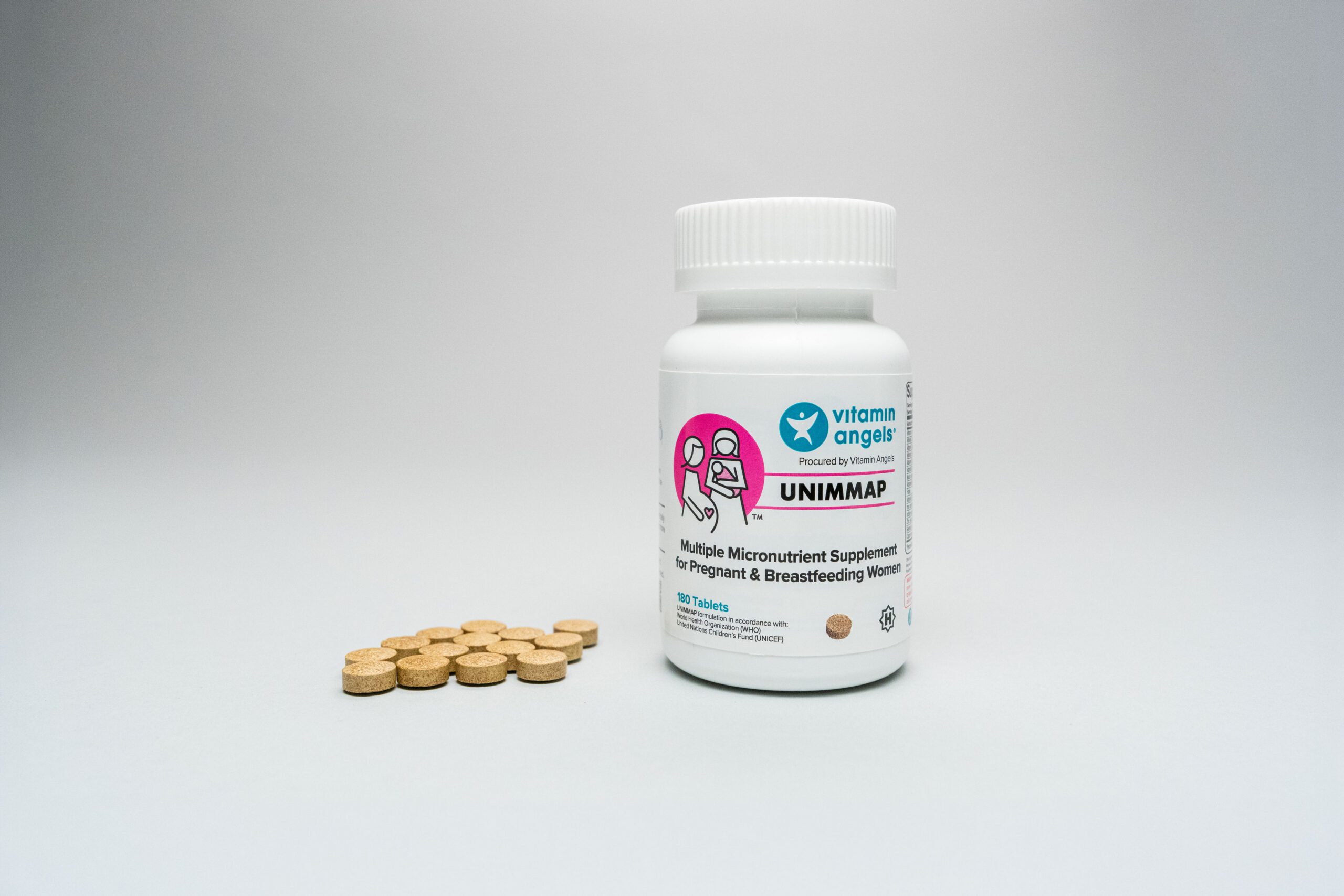
United Nations International Multiple Micronutrient Antenatal Preparation Multiple Micronutrient Supplements (UNIMMAP MMS) is a rigorously tested, internationally recognized formulation of prenatal multivitamins containing 15 essential vitamins and minerals, including iron and folic acid. UNIMMAP MMS has been proven to have a significant and positive impact on maternal and child health.
Developed in 1999 through collaboration between theWorld Health Organization (WHO), the United Nations University, and UNICEF, UNIMMAP MMS was tested in rigorous randomized controlled trials for safety and effectiveness. In 2021, it was added to the WHO Essential Medicines List, recognizing it as one of the most proven, cost-effective, and safe interventions for pregnancy.1
The MMS formulation provided by Vitamin Angels is consistent with the UNIMMAP MMS formula and manufactured to international quality standards.*
Proven Impact: What the Evidence Shows About UNIMMAP MMS
Strong evidence shows that UNIMMAP MMS significantly reduces the risk of adverse birth outcomes, especially in undernourished pregnant women, including low birth weight, resulting from preterm and small-for-gestational-age births.8 Among its benefits, MMS can:
- Reduce the number of infants born with low birthweight by 12-14%
- Reduce the number of preterm births by 6-8%
- Reduce stillbirths by 8%
For children born to malnourished mothers, the benefits of UNIMMAP MMS are even more pronounced:8 MMS has been found to reduce low birthweight by 19% and six-month infant mortality by 29% when given to anemic pregnant women. 12 Proper early nutrition also sets children up for stronger physical and cognitive development throughout childhood.⁸ One modeling study estimated that scaling MMS to 90% coverage across 132 LMICs could generate more than five million additional school years and $18 billion in lifetime income.9 MMS improves birth size and infant growth through 6-12 months of age.13
How Vitamin Angels Delivers Impact
Vitamin Angels takes a comprehensive, partner-centered approach to ensuring MMS reaches the women who need it most across 42 countries and counting.
Expanding Access
Vitamin Angels partners with qualified local organizations, governments, NGOs, and academic institutions to provide direct in-kind grants of UNIMMAP MMS alongside the tools needed for effective, sustainable implementation. Collaboration enables Vitamin Angels to reach the most underserved and nutritionally vulnerable pregnant women in context-specific ways.
Building Demand and Adherence
Vitamin Angels offers evidence-based social behavior change strategies, including education, healthcare provider training, and counseling programs, to help women understand why taking MMS early,daily, and throughout their pregnancy matters for their health and their baby’s development.
Strengthening Systems for Lasting Change
Vitamin Angels works to strengthen global supply chains and conducts advocacy to build consensus among key stakeholders, pushing toward a more enabling environment for UNIMMAP MMS, maternal care, and health equity, for generations to come.
*Vitamin Angels does not manufacture MMS, nor do we have any financial interest or ties to pharmaceutical manufacturers or the success of any supplement or intervention we offer. We uphold the highest standards when partnering with MMS manufacturers and select only those who produce MMS consistent with the UNIMMAP formulation and internationally recognized quality and cGMP standards.
References
5. The World Health Organization, 2021, Global anaemia estimates.
6. Kominiarek et al. 2017. Nutrition recommendations in pregnancy and lactation. Med Clin North Am.