
Initiative to Advance Implementation Science in Nutrition
A collaboration between Vitamin Angels and the Center for Human Nutrition at the Johns Hopkins Bloomberg School of Public Health, working together to strengthen how life-saving nutrition interventions reach the people who need them most.
Updated May 6, 2026
Overview
Formalized in 2022, the Initiative to Advance Implementation Science in Nutrition generates and disseminates evidence to accelerate the introduction and/or scaling of maternal, infant, and young child nutrition (MIYCN) interventions around the world.
The Initiative aims to prevent maternal and young child undernutrition globally and applies a systematic implementation science approach to understanding and addressing barriers and enablers to effective and quality implementation of health interventions, strategies, and policies. Central to this work is our capacity to bring together and mobilize a broad range of partners at the local, regional, and global levels.
Collaborators include governments, ministries of health, multilateral agencies, NGOs, technical partners, other academic institutions, and private sector organizations who are all working to reach the most nutritionally vulnerable groups — pregnant women, infants, and young children.
Our Approach
Through the Initiative, we work across three core areas:
- Identifying and addressing barriers to the implementation of effective and quality evidence-based nutrition interventions.
- Connecting partners with technical expertise and a broad network of partners including government, NGOs, and academic institutions.
- Generating and sharing data to advance global advocacy for the introduction and/or scaling of nutrition interventions.
Research & Structure
The Initiative conducts research and facilitates research opportunities for graduate students, contributing to the next generation of global health nutritionists.
The Initiative is composed of global health nutritionists from Vitamin Angels and the Center for Human Nutrition at the Johns Hopkins Bloomberg School of Public Health. It is governed by an advisory committee with representatives from both organizations, ensuring scientific rigor and shared accountability.
Our Partners
This Initiative reflects our commitment to working with—and in support of—partners, communities, and systems already engaged in improving nutrition outcomes. We amplify the efforts of those closest to the work, prioritizing collaboration over top-down direction.
Partner types include:
- Governments and Ministries of Health
- Multilateral agencies
- International and local NGOs
- Academic institutions and technical partners
- Private sector organizations
Learn More
Joint Publications
Through the Initiative, Vitamin Angels and the Johns Hopkins Bloomberg School of Public Health have co-authored a growing body of peer-reviewed papers and reports, advancing the evidence base for the implementation of maternal and young child nutrition interventions. Topics span implementation experiences with multiple micronutrient supplementation (UNIMMAP MMS)— commonly known as prenatal vitamins and minerals—including work in Haiti, Indonesia, India, the Democratic Republic of the Congo, the United States, and with the United Nations Relief and Works Agency for Palestine Refugees in the Near East (UNRWA).
Published outlets include Sight and Life, Field Exchange, and Food and Nutrition Bulletin, among others. This body of work directly informs how nutrition interventions are introduced, scaled, and sustained within antenatal care systems globally. For a full list of publications, visit the Initiative to Advance Implementation Science in Nutrition’s publications page.
Global collaborations
The Initiative’s work spans multiple continents, with implementation research designed and led in close partnership with local governments, Ministries of Health, and community-based organizations.
Indonesia
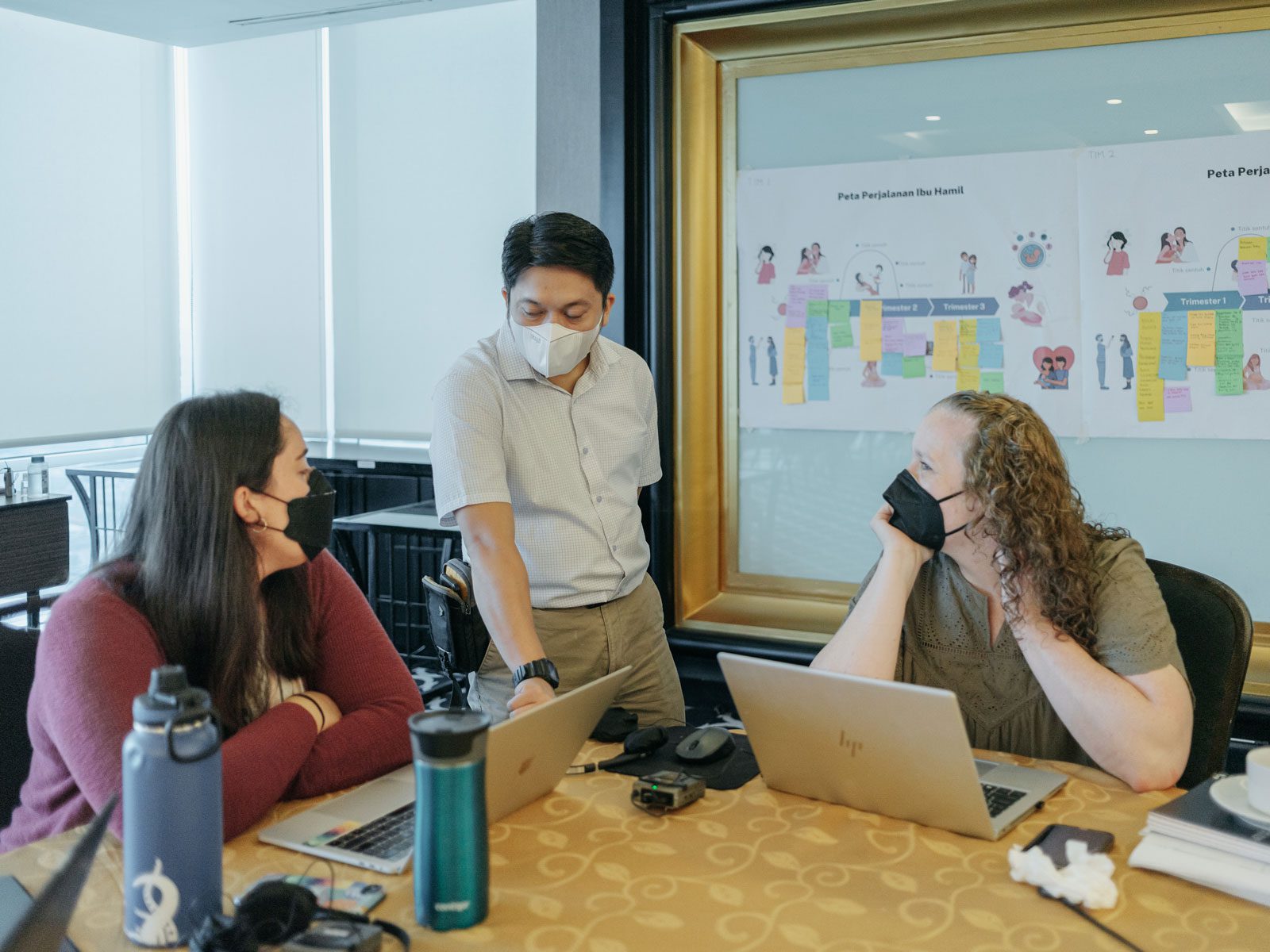
In Indonesia, the Initiative collaborated with researchers from local universities and the Johns Hopkins Bloomberg School of Public Health from 2019 to 2024 to conduct formative research on barriers and enablers to introducing MMS within the country’s antenatal care system. This research directly informed Indonesia’s national MMS program, which launched in October 2024, making it one of the first countries in the world to do so.
Haiti
In Haiti, the Initiative partnered with the Ministry of Public Health and Population and the Haitian Health Foundation to assess barriers to MMS uptake among pregnant women and design context-specific strategies to strengthen adherence.
Uganda
In Uganda, the Initiative worked alongside the Ministry of Health, UNICEF, and the Child and Family Foundation Uganda to conduct formative research exploring how antenatal MMS can be introduced and scaled within the country’s existing antenatal care system. Across all settings, the approach prioritizes amplifying the efforts of local partners and building the enabling environments needed for sustainable, country-led nutrition programs.
For more information, visit the Initiative to Advance Implementation Science in Nutrition’s Our Work page.
Read More
Read more about the Initiative, contributing researchers and advisory committee, and work that is being conducted around the world to improve access to evidence-based nutrition interventions.