
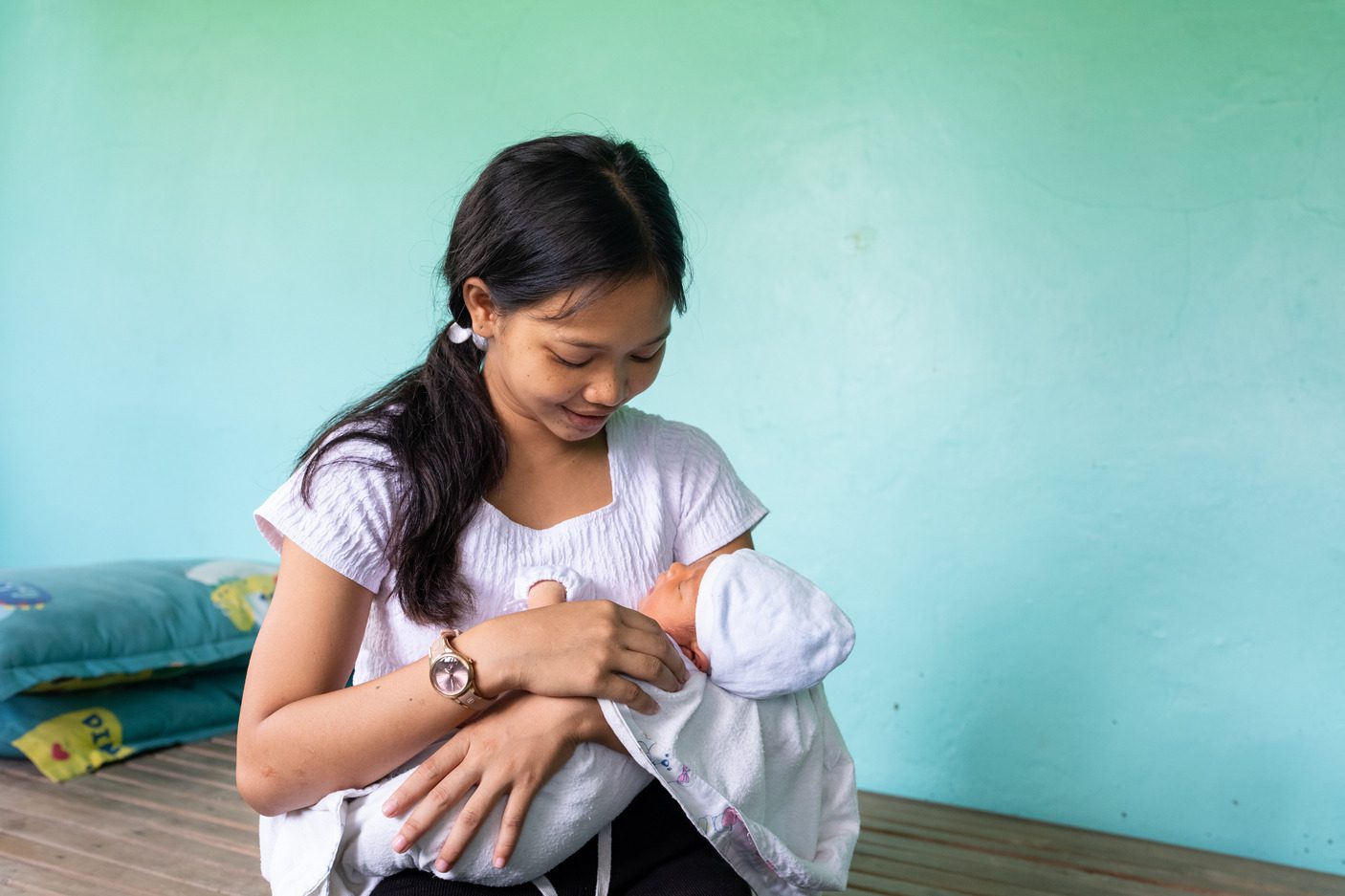
For families in Palawan, Philippines, optimal nutrition is not a single intervention or a single moment. From pregnancy through the first five years of childhood, changing needs call for complementary nutrition solutions and strong local systems that help families access them when they matter most.
For Sheramy Loreto, some of the most important choices she makes for her two children are also the simplest. She breastfeeds them and makes sure they receive vitamin A supplementation and deworming treatment. She thinks about what those choices could mean far beyond childhood.
“My dream for my two children is for them to have healthy bodies and to finish their studies,” Sheramy says.
The connection between nutrition today and opportunity tomorrow is at the heart of Vitamin Angels’ work.
The nutritional needs of women and children change rapidly from pregnancy through the first five years of life. A pregnant woman needs specific micronutrients to support her health and her baby’s development. A newborn benefits from breastfeeding and its combination of nutrition and protection against infection. As children grow, they continue to need adequate nutrition while facing other risks, including vitamin A deficiency and intestinal worms that can interfere with nutrient absorption, growth, and health.
No single intervention can address all of these needs.
That is why Vitamin Angels connects complementary nutrition interventions that support women and children from pregnancy through age five. Each intervention is evidence-based and effective on its own. Together, and when delivered through strong, sustainable local systems, they can provide a continuum of support during some of the most important stages of growth and development.
This approach reflects the Vitamin Angels 2030: Science. Systems. Scale. strategy, which uses evidence to identify what works, strengthens the systems that make consistent delivery possible, and helps high-quality, proven solutions reach more women and children sustainably.
In Aborlan, a municipality on the island of Palawan in the Philippines, this continuum is becoming part of everyday community life.
Beginning before birth
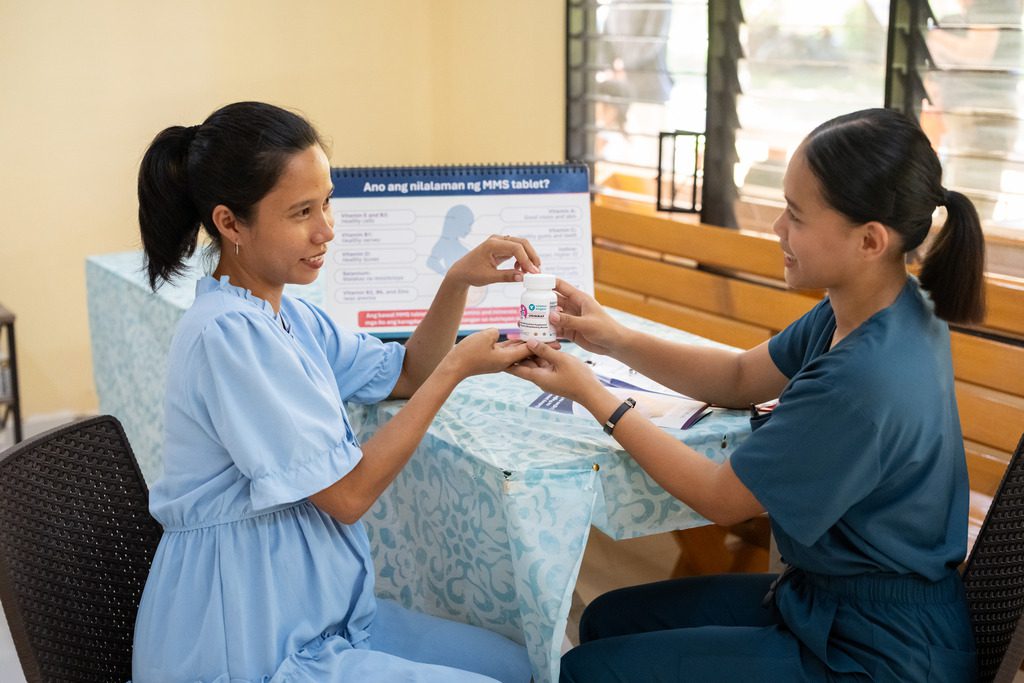
Vitamin Angels introduced multiple micronutrient supplementation (MMS), also known as prenatal vitamins and minerals, in the Philippines in 2018. MMS provides women with a broad range of essential vitamins and minerals needed for a healthy pregnancy.
MMS helps reduce the risk of stillbirth as well as several types of small, vulnerable newborns, who face combinations of risks associated with some of the highest rates of neonatal mortality. Among women who are anemic during pregnancy, MMS can reduce the risk of infant mortality through six months by 29%. And it is highly cost-effective: MMS costs approximately $2 to $3 per pregnancy, with every $1 invested generating an estimated $37 in economic returns.
But having an effective product is only part of the equation.
Vitamin Angels also studies how women experience nutrition services and the factors that can help them use those services consistently. In the Philippines, implementation research found that women generally liked MMS, but still, some struggled to take it throughout their pregnancy, often for a very ordinary reason: they forgot. That insight is now helping shape counseling and training for health workers.
Vitamin Angels is working with the Philippines Department of Health to adapt and roll out MMS training for service providers and support the country’s broader transition from iron and folic acid supplementation for pregnant women to MMS.
The goal is not simply to introduce a better supplement, it is to help make that supplement part of a stronger maternal nutrition system.
From pregnancy to a baby’s first months
Nutrition needs do not stop at delivery.
In Palawan, the community-based Barangay First 1,000 Days program, or BF1KD, brings support closer to families.
Rather than asking mothers to navigate a series of disconnected services, the community-based platform brings pregnant women, mothers, and caregivers together in support groups facilitated by trained local health workers. Nutrition education and breastfeeding promotion take place alongside the delivery of other proven interventions.
As Aborlan Municipal Nutrition Officer Marica Madeja explains, services that once happened separately are increasingly happening together.
Before BF1KD, mothers’ classes and supplementation activities were conducted independently. Now, mother support group sessions can happen at the same time pregnant women receive MMS. “It works harmoniously,” she says.
For Richelle Bendicio, mother of two children, breastfeeding became particularly important after her youngest child developed severe allergies.
Through BF1KD, Richelle learned about exclusive breastfeeding. She says her baby never developed a fever or needed hospitalization despite her allergies.
“The doctor told me, ‘If you weren’t breastfeeding, your baby’s condition would be much worse,’” Richelle recalls.
Exclusive breastfeeding gives infants optimal nutrition and helps protect against infection during the first six months of life. Continued breastfeeding from six months through age two alongside safe, diverse complementary foods can support healthy growth.
Vitamin Angels strengthens the nutrition continuum by providing training tools and technical assistance to help health care providers improve nutrition counseling, strengthen breastfeeding services, and give caregivers practical information they can use at home.
Protecting children as they grow
As babies become toddlers and young children, their nutrition needs keep changing.
Vitamin A is essential for healthy growth, immune function, and vision. Vitamin A supplementation (VAS) is one of the most affordable and impactful child survival interventions available, reducing child mortality by up to 24% while helping prevent blindness.
Deworming addresses another threat.
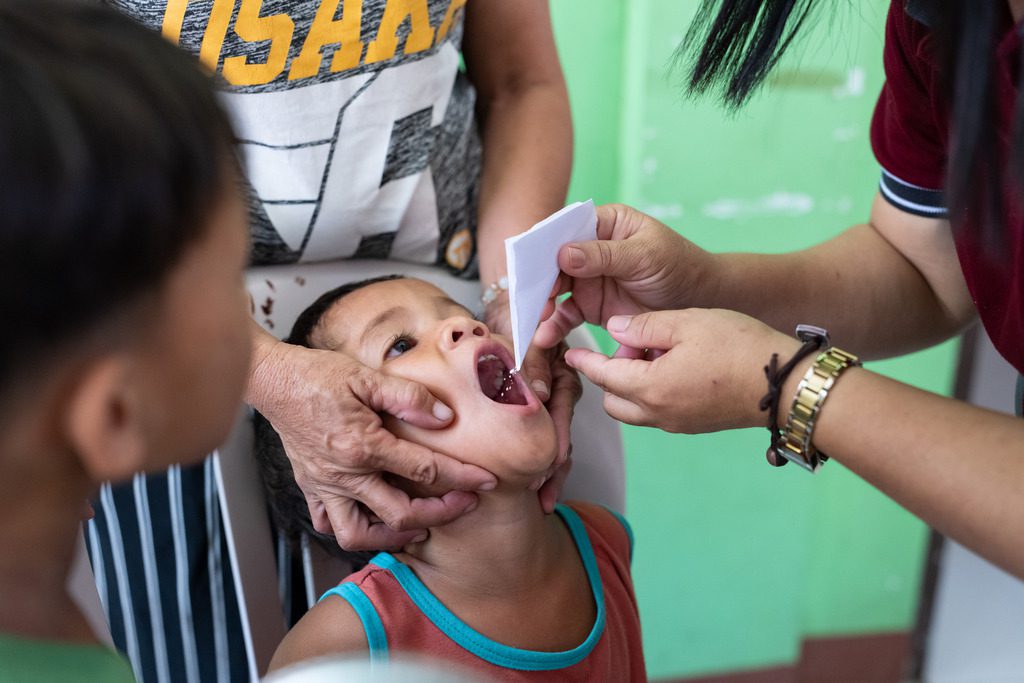
Deworming treatment treats intestinal worms that can interfere with nutrient absorption, growth, and overall health. Deworming is an effective, highly affordable intervention, costing just $0.50 per treatment. In addition to improving children’s health today, it contributes to better educational outcomes and increased economic productivity later in life.
Vitamin Angels delivers VAS and deworming together, helping partners strengthen delivery systems so children consistently receive these proven interventions as part of comprehensive child health services.
For Sheramy, the benefit is tangible.
“It’s very helpful,” she says of deworming. “It removes the parasites from the children’s bodies.”
She would recommend it to other parents, she says, because she has seen the difference it’s making for her own children.
More than the sum of its parts
Women and children need the right nutrition support at the right time.
During pregnancy, that can mean MMS. For an infant, it can mean support for exclusive breastfeeding. As a child grows, vitamin A supplementation, deworming, continued breastfeeding, complementary feeding, and nutrition counseling can help address new needs and risks.
But integration is about more than placing several interventions next to one another. It is also about strengthening the system around them.
In Aborlan, only four municipal nutrition staff once were responsible for reaching 19 barangays. Through BF1KD, volunteer Barangay Nutrition Scholars have been trained to facilitate sessions within their own communities with far less supervision.
Some of Palawan’s community health workers have already served their communities for 10 or 20 years. Building their skills helps to support positive nutrition practices even when a project or training ends. It stays embedded in the people families already know and trust.
The local government is investing too. Aborlan began BF1KD in five barangays before expanding it to all 19. Municipal leaders then passed an ordinance to institutionalize and support implementation.
When effective nutrition interventions are connected through a system designed to deliver them together, progress is possible. Local monitoring has documented improvements in child nutrition, prenatal care attendance, prenatal vitamin use, and exclusive breastfeeding. In 2025, Operation Timbang Plus, the Philippines’ annual nationwide child nutrition monitoring program, reported relative reductions of 4.1% in stunting, 3.6% in underweight, and 10.7% in wasting among children under five.
A model for lasting impact
This approach reflects Vitamin Angels 2030: Science. Systems. Scale.
For more than 30 years, Vitamin Angels has worked to expand access to proven, affordable nutrition interventions for women and children. Our strategy builds on that foundation: grounding programs in high-impact science, strengthening the health and community systems that make effective delivery possible, and helping proven solutions achieve sustainable impact at scale.
That means providing products, but also going further: conducting implementation research to understand what works in different settings; providing technical assistance and training; strengthening service delivery and supply systems; and working with national and subnational governments on policies, financing, monitoring, and long-term sustainability.
It also means looking for opportunities to layer complementary interventions onto existing platforms when doing so can improve quality, efficiency, and health outcomes.
The approach is tailored to each country. In some places, the most important need may be expanding access to life-saving nutrition products. In others, Vitamin Angels works more deeply with governments and communities to strengthen capacity and help proven interventions become part of locally owned systems.
The Philippines represents that deeper level of partnership. Here, Vitamin Angels works with government and community partners not only to reach women and children today, but to help build the capacity to continue reaching them tomorrow.
For families like Sheramy’s, the ultimate measure of this work is much more personal. It is a healthy pregnancy. A well-nourished baby. A child able to grow, learn, and thrive. And, perhaps one day, the future Sheramy imagines when she looks at her children: healthy bodies, an education, and opportunities that extend far beyond the first five years of life. Optimal nutrition is not one moment. It is a foundation built, stage by stage.