
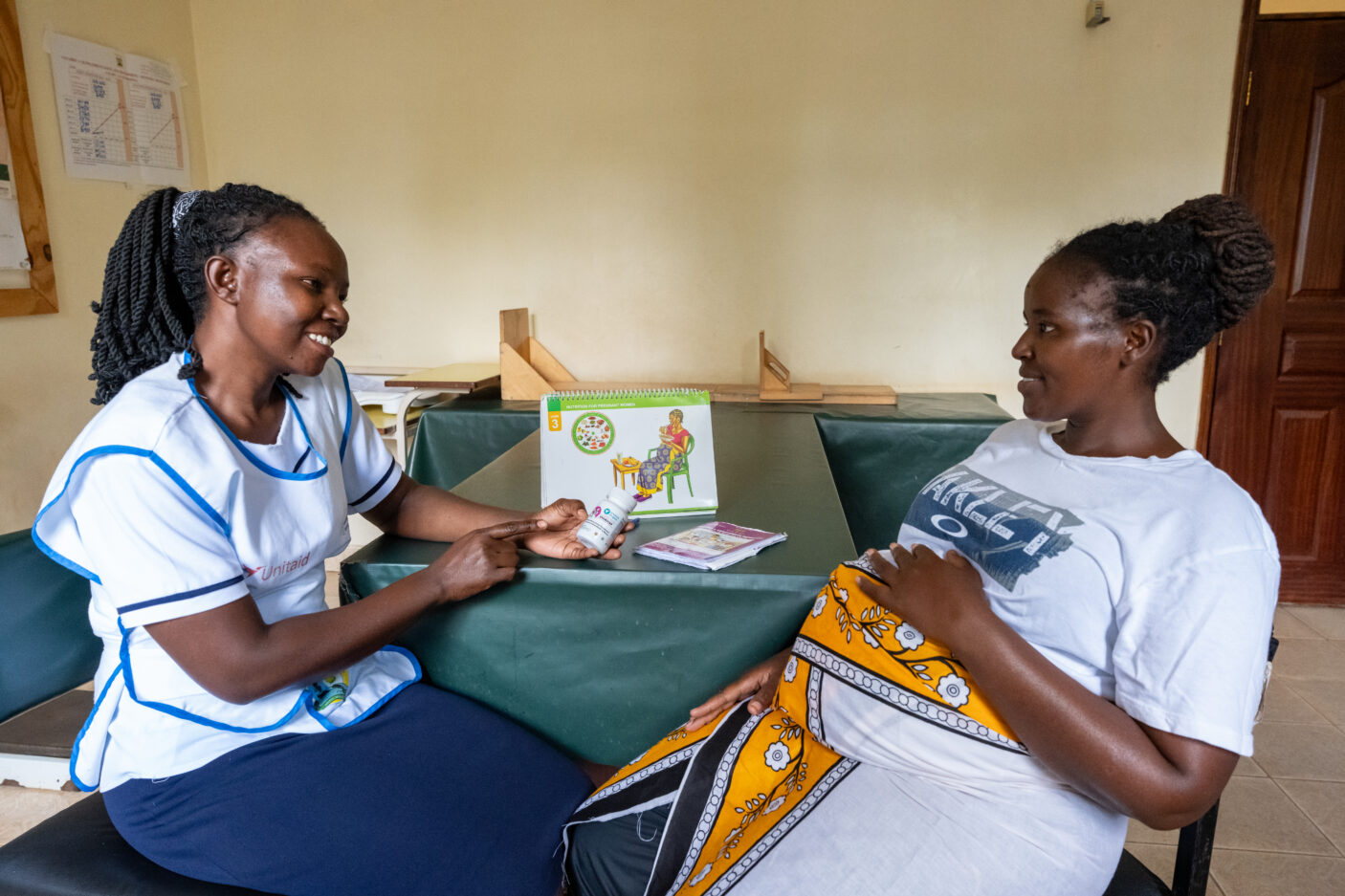
MAKUENI COUNTY, KENYA | MMS PROGRAM STORY
In Makueni County, Kenya, a partnership between local government and Vitamin Angels is putting global evidence into practice and strengthening prenatal care.
In Makueni County, Kenya, malnutrition continues to take a serious toll on the health of women and children. A partnership between the County Government and Vitamin Angels is helping turn global evidence into stronger antenatal care for pregnant women. The goal is simple but ambitious: to help each pregnant woman access the nutrition she needs for a healthier pregnancy and a stronger start for her baby.
Makueni is the first county in Kenya to introduce multiple micronutrient supplementation, or MMS, through the public health system. MMS provides 15 essential nutrients, including iron and folic acid, as well as zinc and vitamins A, C, D, and B12.
For Dr. Lucy Kanya, Africa Regional Technical Director & Transforming Lives Through Nutrition Project Lead at Vitamin Angels, the work in Makueni reflects a much larger opportunity.
When the woman in Makueni spoke to us, she spoke for the women of Kenya. She spoke for the women of the 47 counties in this country. She spoke for the many women across this continent. The government system lasts beyond all of us. When all the partners are gone, the government stays. And who is the government? It is the people.
— Dr. Lucy Kanya, Africa Regional Technical Director & Transforming Lives Through Nutrition Project Lead, Vitamin Angels
That belief that lasting change must be embedded in public systems is central to the work now underway in Makueni.
For decades, iron and folic acid (IFA) supplementation has been the standard of care during pregnancy in many low- and middle-income settings, helping prevent anemia and support healthy fetal development. But adherence remains a challenge in many settings.1 In Makueni County, anemia affects an estimated 40% of pregnant women,2 and 20% of children under five experience stunting.3 Formative research conducted by the County Government and Vitamin Angels found that while 93% of pregnant women attending antenatal care received IFA, only 17% completed the recommended 180-day course.4 The research pointed to reported side effects, misconceptions, late initiation of antenatal care, and social and cultural factors that influence whether women take supplements consistently.
At the same time, global evidence for MMS has continued to grow. MMS has been shown to improve pregnancy outcomes compared with IFA alone, including reducing the risk of low birth weight, preterm birth, stillbirth, and risk of stunting in early infancy; and decreasing six-month infant mortality.5,6,7,8 In 2021, MMS was added to the World Health Organization’s Essential Medicines List.9
In Makueni, the question is no longer whether the evidence exists. The question is how to make implementation work in practice. Makueni County is the first in Kenya to move from evidence to implementation, systematically introducing MMS through its public health sector and generating practical lessons for scale-up.
The evidence has been clear for some time. The challenge has been how to deliver these interventions consistently within our health system. In Makueni, we are showing that it is possible to move from evidence to routine practice
— Dr. Stephen Mwatha, Director of Promotive and Preventive Health Services, Makueni County
Building a Model Grounded in Local Context
Two years before MMS was introduced in Makueni, county health officials, working in partnership with Vitamin Angels, began a careful process of research and engagement. Through a landscape analysis and formative research with women and their families, health workers, policy makers, and community members including community health promoters, they examined antenatal care use, IFA adherence, supply chains, and readiness to introduce MMS early and consistently during pregnancy.
The findings underscored that introducing MMS requires more than making supplements available. Pregnant women also need accurate information, supportive counseling, trained providers, family encouragement, and a health system prepared to deliver MMS through routine antenatal care.
The result is a model built on local evidence, shaped by community realities, and led by the County Government in partnership with Vitamin Angels through the Transforming Lives Through Nutrition consortium, a partnership between Vitamin Angels, Helen Keller Intl, and iDE, funded by The Church of Jesus Christ of Latter-day Saints.
Implementing MMS Through Community Systems
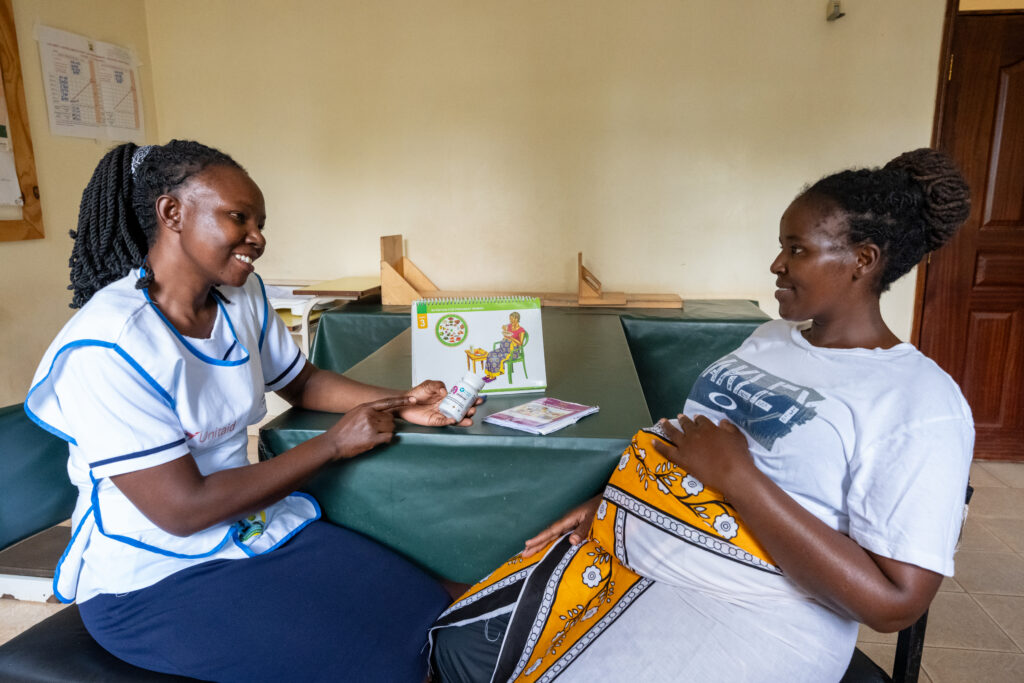
Rolling out MMS across a county requires more than a policy decision. It requires trust, follow-up, and community support.
In Makueni, community health promoters work alongside facility-based health workers to support pregnant women to attend antenatal care clinics early. Antenatal care clinics encourage consistent MMS use throughout pregnancy and their staff are equipped to answer questions on MMS. Their role helps bridge the distance between health facilities and the communities they serve.
The county is also expanding engagement beyond the clinic. Men, including husbands and fathers, as well as broader family networks, are being encouraged to participate in antenatal care and support maternal nutrition.
Leading the Way in Kenya—and Beyond

At the launch of MMS in Makueni County in March 2026, Governor Mutula Kilonzo Jr. reflected on what the moment represents for the county and beyond.
“I am the happiest, happiest leader to be able to be the first in the country to be able to roll out MMS. Then we can lead from the front, set a precedent, and be the trailblazer in this business. We speak to the world and speak to the country and say: we’ve got a solution. We’ve got a solution to what mothers are going through.”— Governor Mutula Kilonzo Jr.
Makueni’s experience is already helping inform conversations about how MMS can be introduced more broadly across Kenya and the region. By showing how implementation can work through government leadership, community engagement, and routine antenatal care, the county is helping generate practical lessons for scale-up.
What Comes Next
The introduction of MMS in Makueni is not an endpoint. It is the beginning of a longer process of learning, adaptation, and scale-up.
In the first year of MMS implementation, 13,000 pregnant women in the county will receive UNIMMAP MMS. As implementation continues, Makueni County and Vitamin Angels will monitor MMS delivery, the community response, and additional support needs of health workers and pregnant women. Assessment of implementation outcomes across the study sites with scale up decisions will occur after one year of implementation. It is anticipated that implementation will scale to all the 21,000 pregnant women in Makueni by mid 2027.
For pregnant women receiving antenatal care in Makueni, MMS is already helping strengthen prenatal nutrition through the public health system. Lessons from the county’s implementation are informing MMS adoption decisions in Kenya and beyond, as well as national discussions through the MMS Technical Working Group, in which Vitamin Angels participates.
By translating evidence into practice, Makueni is strengthening care locally while contributing knowledge that can support MMS implementation across Kenya, the region, and globally.
Vitamin Angels is working alongside Makueni County Government and the Transforming Lives Through Nutrition consortium to support the introduction and scale-up of multiple micronutrient supplementation (MMS) — also known as prenatal vitamins and minerals — in Kenya. To learn more, visit vitaminangels.org.
References:
1. Sanghvi, T. G., Nguyen, P. H., Forissier, T., Ghosh, S., Zafimanjaka, M., Walissa, T., Mahmud, Z., & Kim, S. (2023). Comprehensive approach for improving adherence to prenatal iron and folic acid supplements based on intervention studies in Bangladesh, Burkina Faso, Ethiopia, and India. Food and Nutrition Bulletin, 44(3), 183–194.
4. Makueni County Department of Health. (2026). Makueni consolidated formative research and health record reviews.