
Mothers’ Nutritional Needs Around the Globe
Updated May 20, 2026
Vitamin Angels works with program partners in 65 countries to ensure pregnant women and young children have access to the nutrition they need to thrive. Prenatal vitamins and minerals are central to this work, supporting healthy pregnancies, reducing the risk of complications for mothers and babies, and enhancing birth outcomes. The four stories below, from Guatemala, the United States, Tanzania, and India, reflect why access to nutrition matters and what becomes possible when it is within reach.
As an expecting mother’s body grows during pregnancy, so do her nutritional needs.
The phrase “eating for two” carries real meaning when you consider how many nutrients babies rely on to grow and develop. Yet for millions of women around the world, healthy foods and health services remain out of reach.
These gaps in access often lead to anemia, a common health condition that affects 37% of pregnant women worldwide.1 Babies born to mothers who are anemic can arrive too small or too soon, which carries serious health risks for both mother and child.
The evidence is clear: prenatal vitamins and minerals save lives and improve health outcomes. Research shows that the use of prenatal vitamins and minerals by women who are anemic resulted in a 29% decrease in infant mortality at six months.2
Meet four mothers from around the world and the pregnancies that changed their lives.
Guatemala
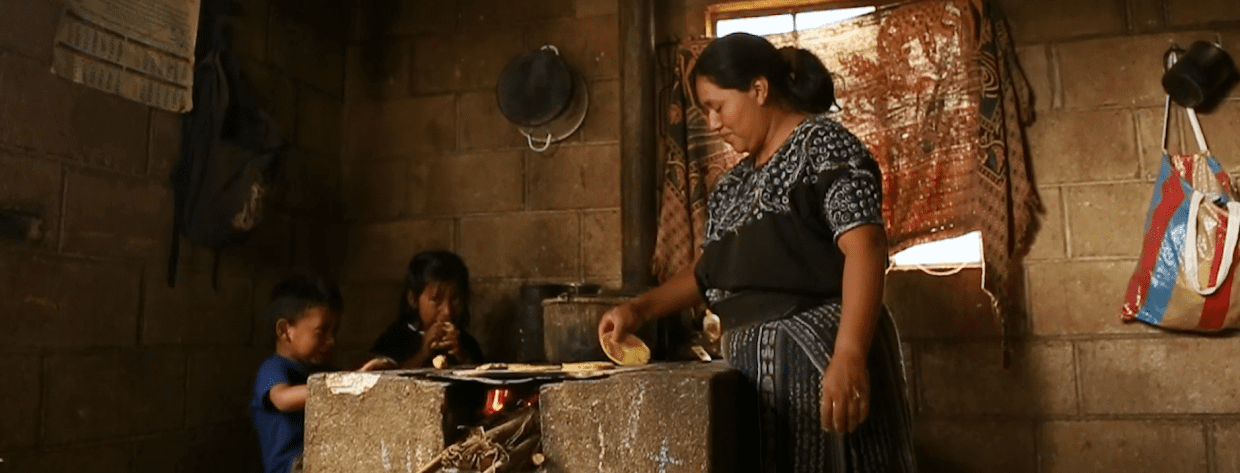
Olga’s hands shaped tortillas reflexively, flattening the dough into discs.
“We [can] only give them one tortilla, and one egg between three or four of us,” Olga shared, describing a typical meal for her children. Limited food access puts her children at risk for the effects of malnutrition.
Guatemala, where Olga’s family lives, has the sixth-highest rate of stunting globally — one indicator of chronic undernutrition.3 In many underserved areas, the most nutritious crops are sold for income, leaving families with foods that lack the nutrients they need. Civil conflict and powerful hurricanes have deepened an ongoing food security crisis, limiting access to health care and nourishing foods.
“As a mom, it hurts when they are sick…I wonder if they are going to get well,” Olga said of her children. “To lose a child is something hard to overcome.”
Through Vitamin Angels’ local program partners, Olga had access to prenatal vitamins and minerals during her pregnancies. “My children were born well and healthy,” she shared. “I feel like [the prenatal vitamins and minerals] give me energy.” And more than that: “It gives me strength to give them what they need.”

United States
The suburbs of Kissimmee, Florida are saturated with fast-food restaurants that offer sustenance at dollar-menu prices, a dynamic that contributes to Kissimmee’s status as a food desert.
According to the United States Department of Agriculture, approximately 39 million Americans live in food deserts, low-income and low-access areas more than 1 mile (urban) or 10 miles (rural) from the nearest supermarket or large grocery store.4 Instead, fast food restaurants and convenience stores provide calorie-rich but nutrient-poor options at affordable prices.
Michaela, a 26-year-old mother, works hard to promote healthy eating habits in her family despite these barriers.
“Starting healthy and teaching your kids from a young age really helps them into adulthood,” she said. But when families must choose between nutritious food and essential bills, the tradeoffs are real.
“I can get a bag of chips for about two dollars, or I can get one of those fruit snacks that has grapes, apples, and cheese cubes — that’s four dollars,” the mother of two said. “And my six-month-old needs baby food. So I’m gonna take the chips and a pack of baby food.” She paused. “That’s what you have to come down to sometimes. And that’s sad.”
Access to prenatal vitamins and minerals through Vitamin Angels’ program partner in Lakeland, Florida, made a meaningful difference for Michaela and her family. And Michaela believes that every mother should have access to this critical intervention. She says,“Anybody from a different country, a different culture — the important thing is nutrition. A lot of cultures are different from ours, but every pregnancy is special.”
Tanzania
Motherhood is a familiar part of life for Lidia, a 35-year-old mother of four. But not every aspect of the experience has been easy: many women in her community lack access to healthy food during pregnancy due to limited food availability in the area. The lack of calories and nutrients significantly affected Lidia’s first two pregnancies, especially compared to the latter two. “There’s a big difference compared to now,” Lidia said.
To ensure that other women in her community have the same opportunity, Lidia speaks openly about the benefits of prenatal vitamins and minerals. “Some said, ‘We didn’t receive this medicine, were they good?’ I said they were good,” Lidia shared.
Her children’s health is what drives her. “Good health for my children is eating well and with no diseases,” she said. “Where you can tell from looking at them that they are healthy.”
India
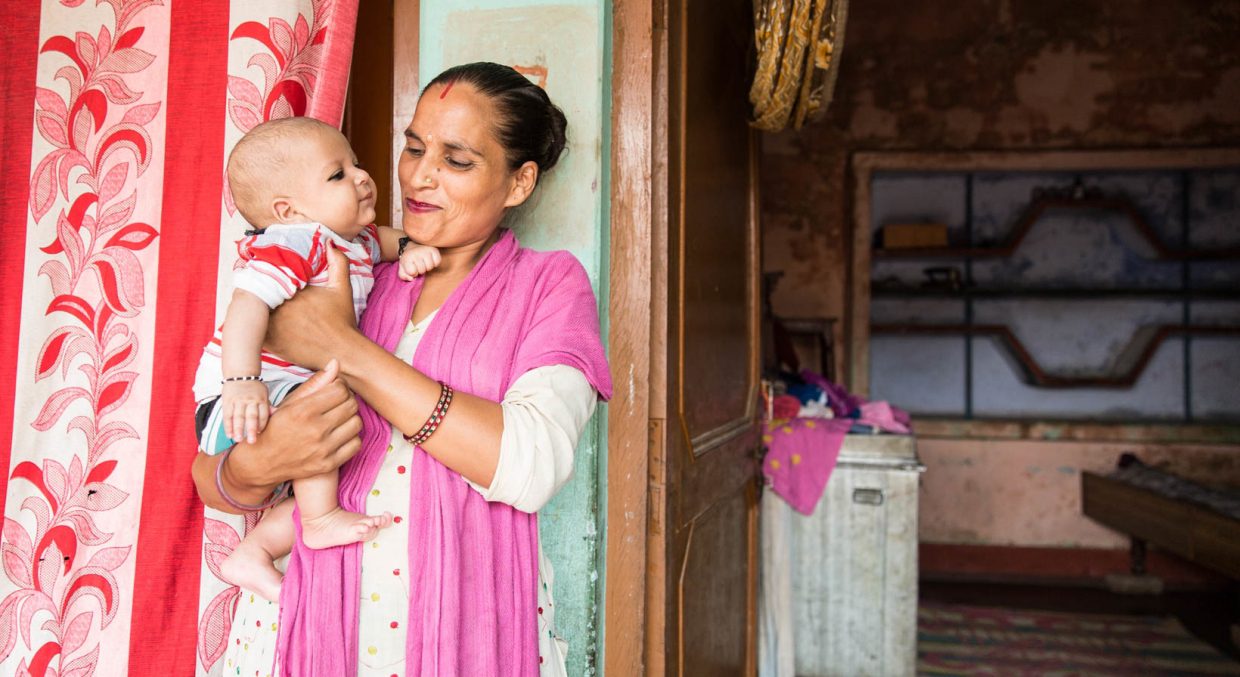
Sundara welcomed us into her home with a bright smile, draped in a shawl the color of bubblegum. The peach- and mint-colored walls carried traces of the home’s past but none of its warmth was lost.
Sundara shared that her three-month-old son, Vansh, had just started rolling over and was trying to crawl. She had also lost two babies before her pregnancy with Vansh, a grief she carries quietly alongside her joy.
Vansh’s birth brought Sundara renewed hope. He entered the world at a healthy weight of nearly eight pounds. His pregnancy was the first in which Sundara had access to prenatal vitamins and minerals.
Vansh is growing and thriving. If his first few months are any indication, his future is bright and Sundara’s hope for what’s ahead is well-founded.
References
- 1. World Health Organization. (2025, February 10). Anaemia.
- 2. Healthy Mothers Healthy Babies Consortium. (n.d.). Multiple micronutrient supplementation (MMS). Micronutrient Forum.
- 3. Perry HB, Stollak I, Llanque R, Blanco S, Jordan-Bell E, Shindhelm A, Westgate CC, Herrera A, Valdez M. Reducing inequities in maternal and child health in rural Guatemala through the CBIO+ Approach of Curamericas: 4. Nutrition-related activities and changes in childhood stunting, wasting, and underweight
- 4. Rhone, A., Williams, R., & Dicken, C. (2022, June). Low-income and low-foodstore-access census tracts, 2015–19 (Economic Information Bulletin No. EIB-236). U.S. Department of Agriculture, Economic Research Service.